
On this page
Abstract
Where it attacks decides the name: rheumatoid arthritis in the joints, Hashimoto's in the thyroid, psoriasis in the skin, ulcerative colitis in the gut, IgA nephropathy in the kidney, lupus almost anywhere. Each goes to a different specialist, yet the same imbalance sits underneath all of them: inflammation that will not settle, kept going by excess body fat, an omega-3 to omega-6 imbalance, foods the person does not tolerate, toxin load and nutritional deficiency. Medicines control the attack and try to protect the organs. They do not correct what keeps the immune system misdirected, and taken for years they bring weight gain, diabetes, blood pressure, infection and side effects of their own. Clinically Supported Lifestyle Correction with Cell Activation Protocol (CSLC-CAP) corrects the body, under doctors' (MBBS and MD) supervision, judged on repeat tests. In this practice symptoms commonly ease within weeks, inflammation markers fall, and medicines come down in steps as the reports allow. Section 9 follows two patients. Autoimmune disease is not cured — it is brought into remission, and the remission has to be kept.
1. Life runs on metabolism
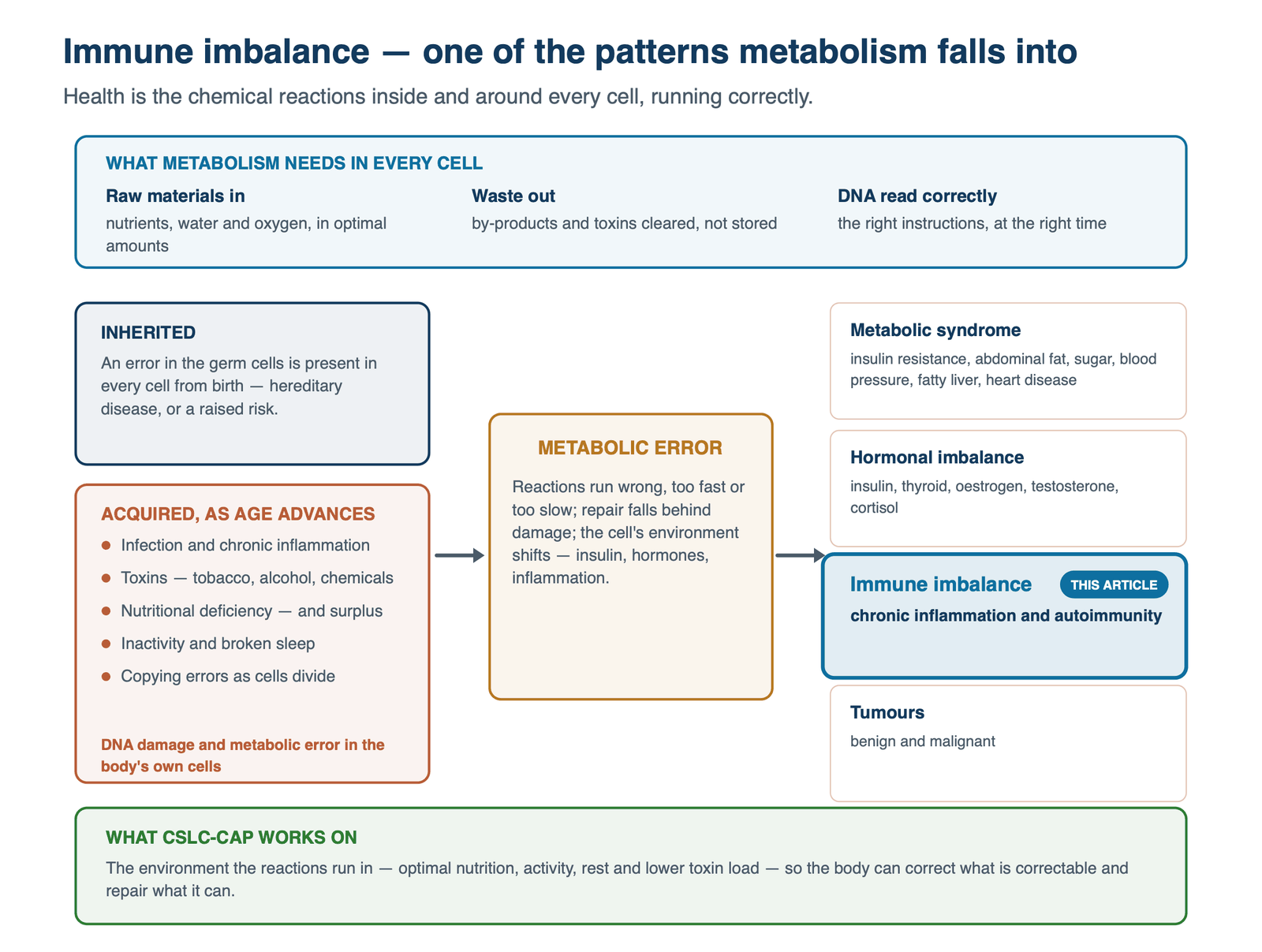
Every function of the body — digesting a meal, moving a joint, fighting an infection, repairing a cell — is a chain of chemical reactions, together called metabolism. They depend on three things: the right raw materials arriving, the waste being cleared, and the instructions in the cell's DNA being read correctly. The raw material for all of it is food: the whole body, including every immune cell, is built from what we eat.
Errors in metabolism come from two places. Inherited errors are present from birth; in autoimmune disease they do not cause the illness on their own, but they raise the risk — which is why a mother's arthritis may appear in her daughter as thyroiditis, psoriasis or vitiligo rather than as arthritis. Acquired errors build up over a lifetime, from chronic inflammation, toxins, nutritional deficiency and a chronic surplus of energy, refined carbohydrate and the wrong fats.
As acquired errors accumulate, the same few patterns appear: metabolic syndrome, hormonal imbalance, immune imbalance — chronic inflammation and autoimmunity — and tumours. This article is about the third. It rarely comes alone.
2. The immune system: defence and healing
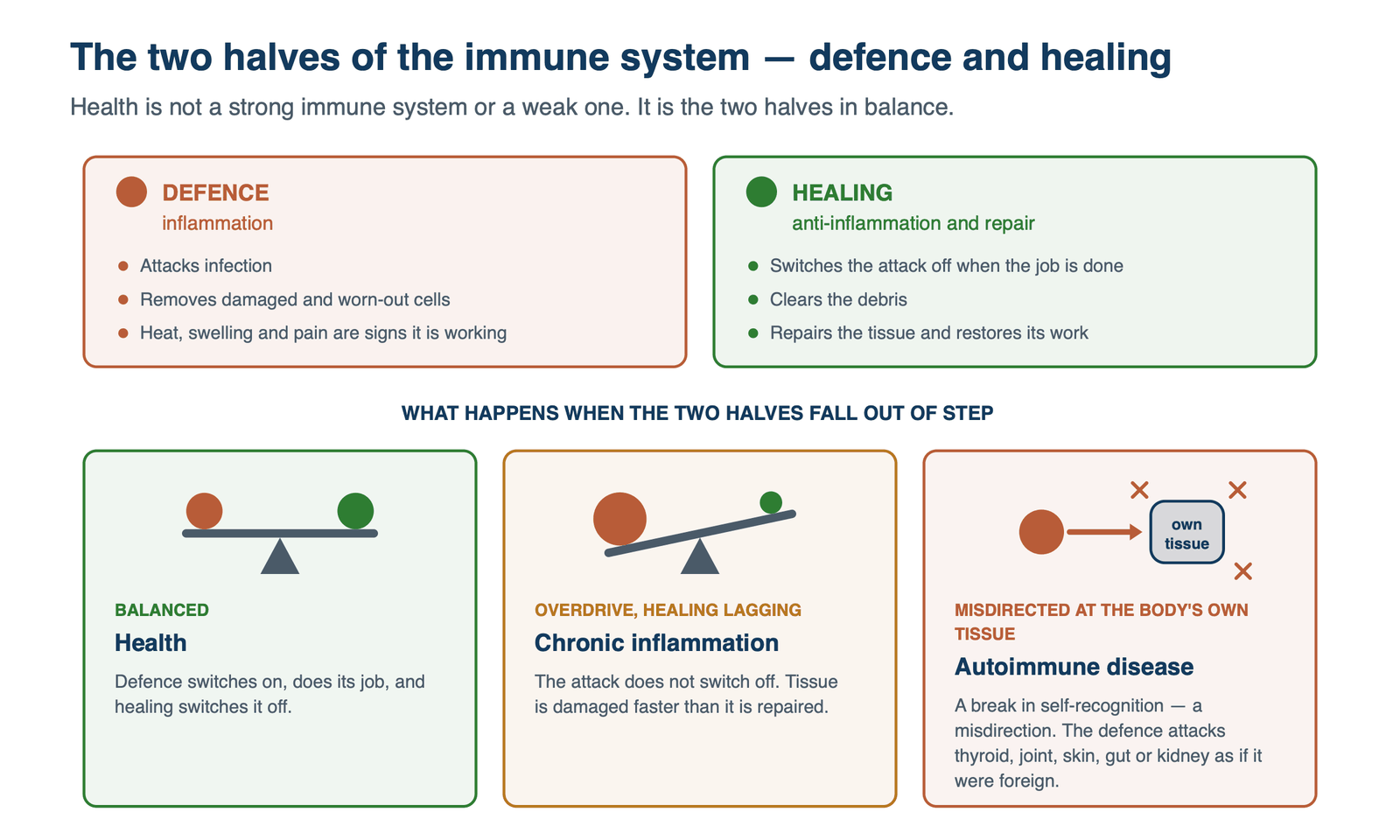
The immune system has two halves. The first is defence: inflammation, the response that kills infection and clears damaged cells. The second is healing: the anti-inflammatory response that switches defence off when the job is done and repairs what was damaged. Health is the two in balance.
When defence runs in overdrive and healing lags, inflammation becomes chronic — the soil of most lifestyle diseases. When that overdrive is also aimed at the body's own tissue, it is autoimmune disease. The immune system carries a self-identifying system that tells it which cells are its own; in autoimmunity there is a break in it. It is actually a misdirection — not an immune system that is too strong, but one that has been pointed the wrong way.
Coeliac disease shows the principle most clearly. In a genetically susceptible person, gluten in wheat sets off an immune attack on the lining of the small intestine; remove the gluten, and the attack settles. Wheat is not a toxin for most people — but for some, it behaves like one. Most autoimmune diseases do not have a single trigger that can be named so neatly. They have several, and they add up.
3. One immune system, many addresses
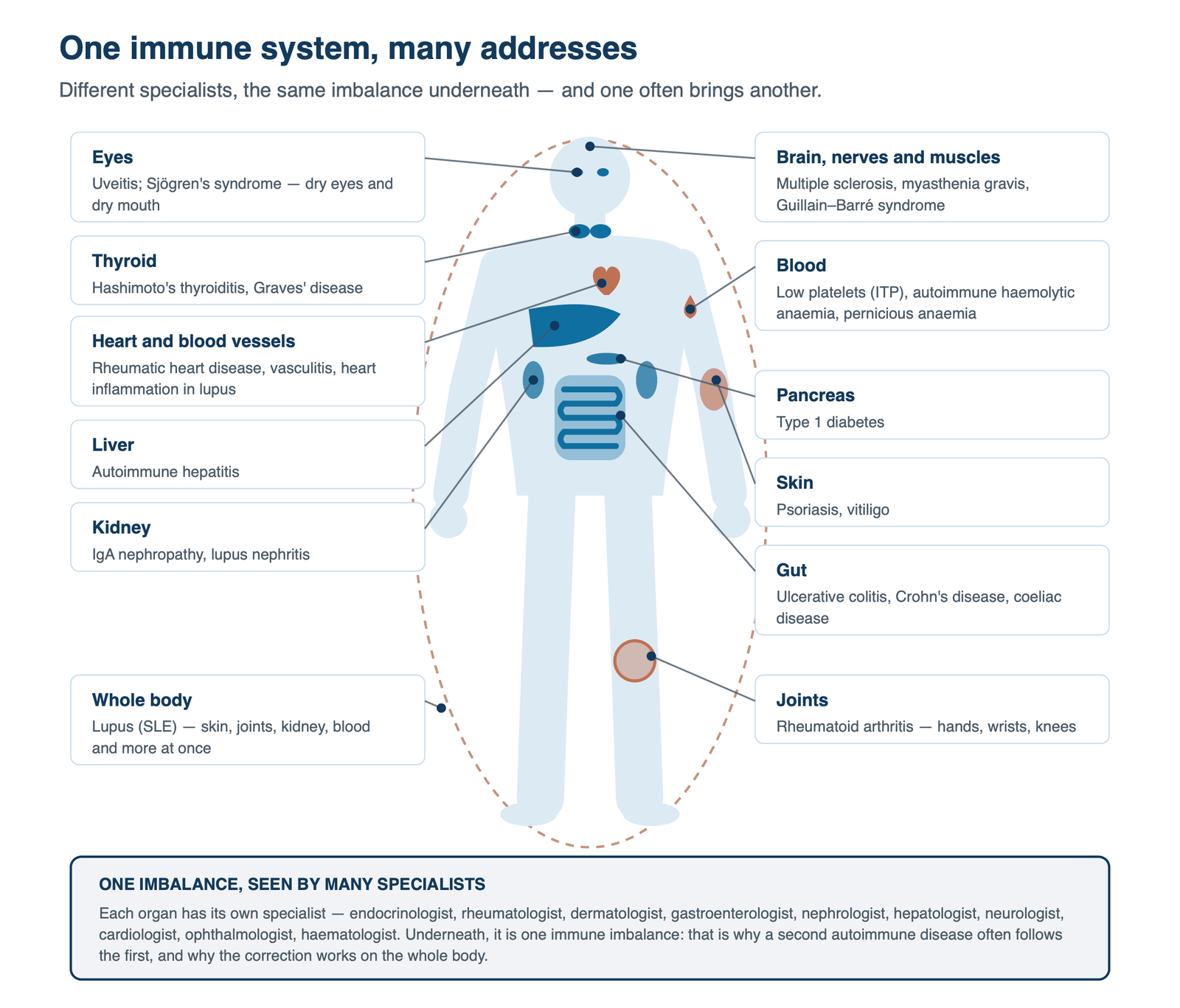
Autoimmune disease affects about one person in ten, and about two in three of them are women. In a survey in coastal central Kerala, one adult in five had an abnormal thyroid function test, and almost half of them carried thyroid antibodies; across eight Indian cities, more than one adult in five carried thyroid antibodies. The common ones, by where the attack falls:
- Thyroid — Hashimoto's thyroiditis (the commonest of all), Graves' disease
- Joints — rheumatoid arthritis; psoriatic arthritis; ankylosing spondylitis
- Skin — psoriasis, vitiligo, alopecia areata
- Gut — ulcerative colitis, Crohn's disease, coeliac disease
- Kidney — IgA nephropathy, lupus nephritis, some forms of nephrotic syndrome
- Liver — autoimmune hepatitis
- Eyes — uveitis; Sjögren's syndrome (dry eyes and dry mouth)
- Brain, nerves and muscles — multiple sclerosis, myasthenia gravis, Guillain–Barré syndrome
- Heart and blood vessels — rheumatic heart disease, vasculitis, inflammation of the heart in lupus
- Pancreas — type 1 diabetes
- Blood — low platelets (immune thrombocytopenia), autoimmune haemolytic anaemia, pernicious anaemia
- Almost anywhere — systemic lupus erythematosus (SLE)
Two features matter for treatment. First, one autoimmune disease raises the risk of another, and most patients carry more than one diagnosis — often alongside diabetes, blood pressure, fatty liver and heart disease. Each organ gets its own specialist and its own prescription; the imbalance underneath is shared. Second, the antibodies appear years before the disease does. In Hashimoto's, thyroid antibodies (anti-TPO, anti-thyroglobulin) rise long before thyroid function falls, which is why a normal thyroid function test is not the end of the question in a tired young woman. "It shows in the tests first; symptoms are felt only much later."
Why women? The established reasons are the second X chromosome — and a molecule it makes, XIST, that can itself become a target — and the effect of oestrogen and of pregnancy on immunity. In this practice there is a further pattern: women carry more body fat than men, and patients with autoimmune disease — even lean ones — carry more fat for their muscle than they should. That is a clinical observation from this practice, not a published finding, and it is the subject of the next section.
Allergy — asthma, eczema, hay fever — is a separate category: an over-reaction to something outside the body rather than an attack on the body itself. It shares many of the same drivers, and is covered in the lung disease article.
4. What keeps the immune system misdirected
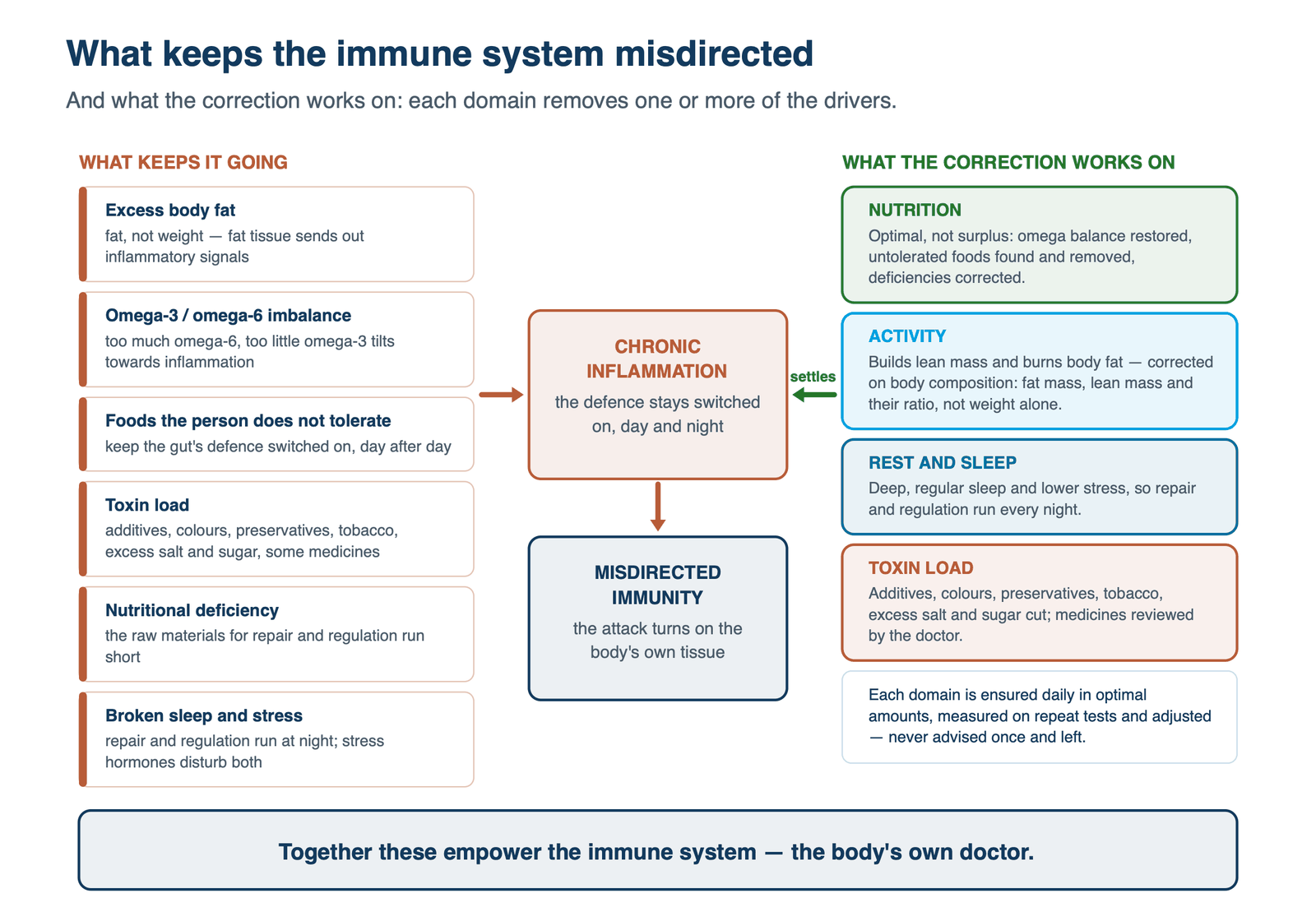
Genes load the gun; the environment keeps it firing. When one identical twin has an autoimmune disease, the other — with the same genes — often does not. In this practice five things come up again and again.
Excess body fat — fat, not weight. Fat is not stored fuel alone. It is an active organ that releases inflammatory signals, and the more of it there is — especially around the organs — the higher the inflammation runs. Excess weight raises the risk of rheumatoid arthritis and psoriasis, and losing it improves psoriasis and psoriatic arthritis — in one study of psoriatic arthritis, the share of patients with minimal disease activity rose from under a third to over half after weight loss. What matters is the fat-to-muscle ratio, not the scale: "Not just weight reduction — the fat has to go."
The omega-3 to omega-6 balance. Both are essential fats; the body cannot make them, so they come only from food. The immune system builds its signalling molecules from them — the omega-6 side tends towards inflammation, the omega-3 side towards resolving it. The modern diet carries far too much omega-6 and far too little omega-3, and the cell membranes of every tissue, the brain included, are built from what is eaten. Correcting that balance at the level of the cell is a central part of the correction.
Foods the person does not tolerate. Gluten in coeliac disease is the proven example — in India it follows wheat, far commoner in the wheat-eating north than in the rice-eating south. Milk and other foods behave the same way in some people. These differ from person to person, so they are found individually — by careful withdrawal and reintroduction, with coeliac disease tested for before gluten is withdrawn.
Toxin load. Anything the body does not need, and has to deal with, is a burden: tobacco, alcohol, colours, preservatives and other additives, pesticide residue, polluted air and water, excess salt and sugar — and some medicines, which can themselves trigger autoimmune reactions. Smoking is the clearest case: in people who carry the main risk genes, it multiplies the risk of rheumatoid arthritis many times over, and it raises the risk of lupus; occupational silica dust roughly doubles the risk of rheumatoid arthritis. "Any excess is a toxin."
Nutritional deficiency, broken sleep and stress. The immune system is built and run from nutrients; a deficiency leaves its regulation short of material. Disturbed sleep goes with higher inflammation, and stress-related disorders raise the risk of developing an autoimmune disease by about a third. Much of the immune system lives in the wall of the gut, and the bacteria in it — the microbiome — are shaped by all of the above.
None of these is a cause on its own. Together they keep the defence half of the immune system running and the healing half starved — and they are all things that can be corrected.
5. What current treatment offers — and what it costs
Modern treatment of autoimmune disease is effective, and in a severe flare it saves organs and lives. Its tools work by suppressing or redirecting the immune response.
Table 1. Current treatments for autoimmune disease — what they do, where they stop, and their side effects
| Treatment | What it does | Where it stops | Main side effects |
|---|---|---|---|
| Steroids (prednisolone, methylprednisolone; depot injections) | Rapid control of inflammation in a flare | Suppress broadly; the cause is untouched, and symptoms often return as the dose comes down | Weight gain, raised sugar and blood pressure, thinning bones, infection, cataract; the adrenal gland is suppressed |
| Disease-modifying tablets (methotrexate, hydroxychloroquine, sulfasalazine, leflunomide) | Slow disease activity; protect joints and organs | Long-term; activity often returns when they are stopped | Liver and blood-count effects, nausea, mouth ulcers; eye checks with hydroxychloroquine |
| Immunosuppressants (azathioprine, mycophenolate, tacrolimus, cyclophosphamide) | Protect the kidney and other organs in severe disease | Suppress defence as well as the attack | Infection; blood-count effects; with long use, some cancers |
| Biologics and targeted tablets (anti-TNF, IL-17 and IL-23 blockers, tofacitinib, apremilast) | Block one immune signal precisely | Costly; the effect fades when they are stopped | Infection, including reactivated tuberculosis; some carry heart and clot warnings |
| Thyroxine (Hashimoto's) | Replaces the hormone the gland no longer makes | Does not touch the antibodies attacking the gland | Palpitations and bone loss if over-replaced; tiredness if under |
| Mesalazine (colitis); pain relievers | Settle gut inflammation; relieve pain | Control, not correction | Pain relievers: stomach, kidney and blood pressure |
Three patterns run through the table. Relief, then dependence: the medicine controls the disease while it is taken, and the disease is still there when it is stopped. Suppression is not selective: a medicine that quietens the attack also quietens the defence, which is why infection is the common side effect — and why, in long use, the immune system's work of removing damaged cells is weakened. One medicine leads to another: "Steroids are among the most useful medicines we have" — but continued for years they bring weight gain, diabetes and high blood pressure, and each of those brings its own prescription.
6. Medical care and health care — where CSLC-CAP sits
Medical care treats what has appeared: a flare gets a steroid, an inflamed joint a disease-modifying drug, a failing thyroid thyroxine, an inflamed kidney an immunosuppressant. Each is correct, often necessary, and sometimes urgent. Health care asks a different question: not what is happening now, but what in this person's body keeps the immune system misdirected. "Usually the treatment is disease based. This is not disease based. This is body correction."
CSLC-CAP is health care, done in a clinical setting.
Table 2. Medical care and health care: complementary, not competing
| Aspect | Medical care | Health care (CSLC-CAP) |
|---|---|---|
| Primary aim | Diagnose and control the disease and its flares | Correct and support the metabolism underneath, so the immune system can rebalance |
| Main tools | Medicines, procedures, specialist management | Optimal nutrition, activity, rest, a low-toxin environment |
| Focus | The disease — the joint, the skin, the gland, the kidney | The body the disease lives in — fat, fats, food tolerance, toxins, sleep |
| Timing | Once disease has appeared | Upstream and ongoing, guided by repeat testing |
| In autoimmune disease | Steroids, disease-modifying drugs, immunosuppressants, biologics, thyroxine | Settle inflammation, rebalance defence and healing — the conditions alongside move too |
| Measure of success | Symptoms controlled, reports within range | Symptoms relieved and markers corrected on repeat testing, with fewer medicines |
| The patient's role | Receives the treatment | Carries out the correction every day, with the doctor |
| Supervision | Modern-medicine doctors | Modern-medicine doctors |
7. What CSLC-CAP corrects
Clinically supported means it runs under a doctor and on measurements. Blood parameters and body composition are measured at the start, repeated through the programme, and each next step is decided on what they show. It is not advice given at the end of a consultation and never checked.
Lifestyle correction means the correction is made through nutrition, physical and mental activity, rest and sleep, and toxin load — not through a drug.
CAP — the Cell Activation Protocol — addresses delivery. Every correction made at the level of the whole body has to reach the cells, and that depends on circulation bringing nutrition in and carrying waste out. The structured activity used here drives that circulation segmentally, through the skeletal muscles, which are the only tissue the patient can command voluntarily — and through them, the organs they supply. It is designed to be doable by patients who are deconditioned, in pain or unwell, including from a bed or a chair.
The correction does not focus on the joint, the skin or the gland; it focuses on the body that carries them. "We are not treating the disease; we are treating the body which is having the disease." The aim is to give the immune system an optimal environment for its repair work: excess fat comes down while muscle is kept, the omega balance is restored, the foods and substances the person reacts to are removed, deficiencies are corrected, and sleep is repaired. Defence then has less to react to, and healing has what it needs.
Optimal, not surplus. Nutrition is set to what the body needs — enough of every nutrient, too much of none. A single nutrient added on its own does less than people hope: fish oil capsules ease joint pain and stiffness in rheumatoid arthritis, but on their own do not change the disease-activity score. That is why the whole diet is corrected, not one nutrient added.
Table 3. The four domains
| Domain | What it means | Why every cell depends on it |
|---|---|---|
| Nutrition | Every essential nutrient in the right quantity and ratio — including the omega-3 to omega-6 balance — with carbohydrate set to need and the foods the person does not tolerate removed | It is the raw material the immune system is rebuilt from, and the fats eaten become the signals that switch inflammation on and off |
| Activity | Physical and mental activity the patient can actually sustain now, structured to reach the whole body — lying down or seated where needed — and judged on body composition: fat mass, lean mass and their ratio, not weight alone | It drives the circulation that delivers nutrition to cells and removes accumulated waste, and working muscle lowers inflammation |
| Rest and sleep | Real sleep, and the correction of what is breaking it — pain, worry, night-time symptoms | Repair and the resolution of inflammation happen during it; broken sleep keeps inflammation up |
| Toxin load | Reduction of the specific substances that person reacts to, and of the general chemical burden — tobacco, alcohol, fragrance, spray, preservative, colour, hair dye | What accumulates has to be removed before the immune system stops treating the body as a problem |
Together these empower the immune system, which remains the body's own doctor. "The doctor, the hospital or the operation can only help the immune system."
8. The benefits — what changes, and how it is measured
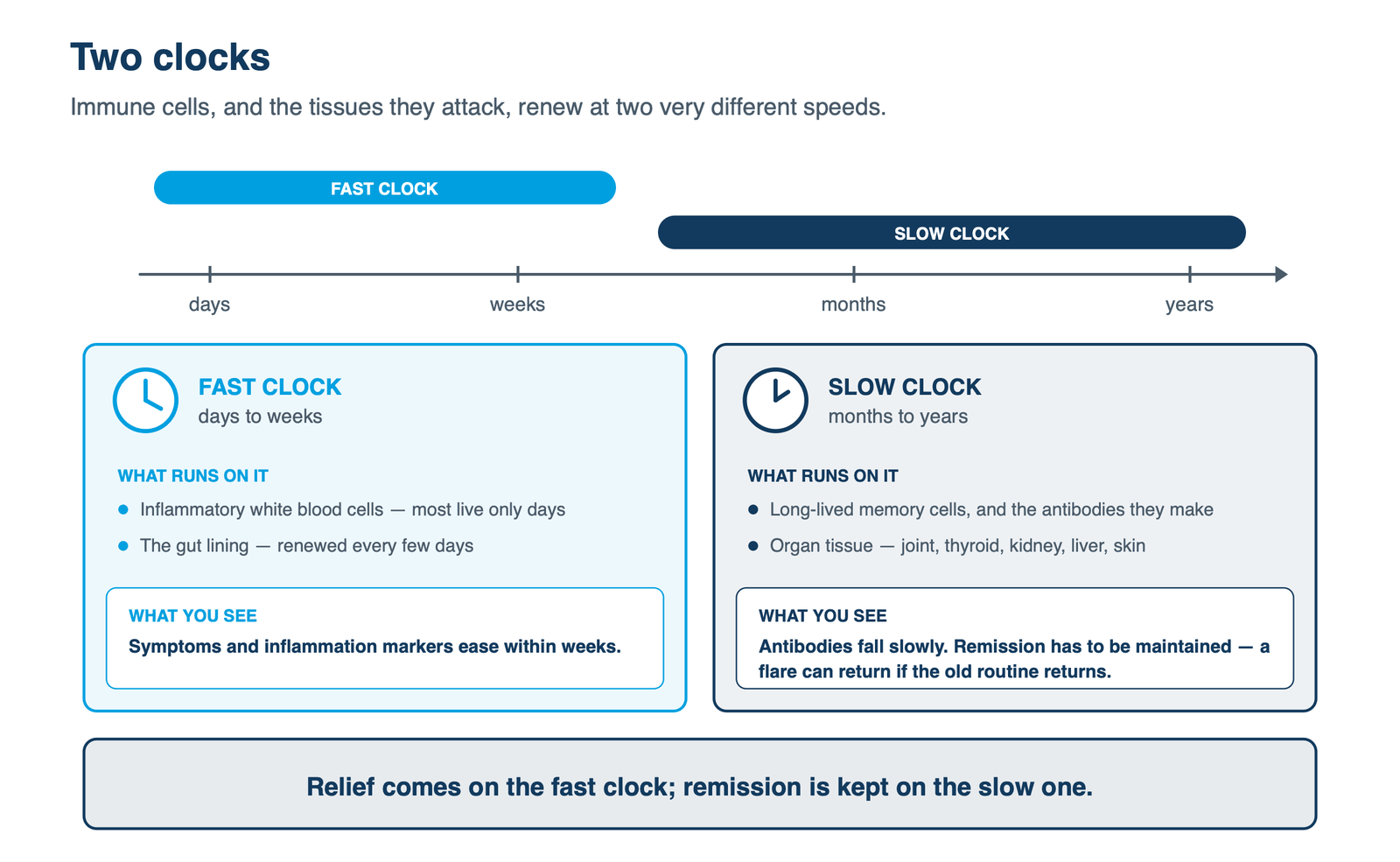
Relief within weeks. The cells that drive symptoms — the white blood cells of inflammation, the lining of the gut — renew themselves within days to weeks. Change what they are built from and exposed to, and they change quickly. In this practice joint pain, itching, stiffness and gut symptoms commonly ease within two to four weeks, long before the slower changes are complete.
Inflammation markers that fall. hs-CRP and ESR are measured at the start and repeated. In this practice hs-CRP commonly falls within the first one to two months, and the disease-specific markers — thyroid antibodies, complement, protein in the urine — are followed on their own schedule. The reports, not the patient's impression alone, decide what happens next.
Less tiredness. Fatigue is often the first sign of active inflammation and the last symptom anyone treats. As inflammation settles and sleep is repaired, energy returns — commonly one of the first things patients notice. In trials, structured exercise reduces fatigue in rheumatoid arthritis and lupus without bringing on flares.
Fewer medicines. As symptoms ease and the reports confirm it, the doctor brings medicines down one at a time — steroids slowly, disease-modifying drugs in steps, pain relievers first. In Hashimoto's, the thyroxine dose can often be reduced as the body recovers, and in some patients stopped, on the evidence of repeat thyroid tests. Section 12 describes how.
Skin, joints and gut together. Psoriasis and psoriatic arthritis are the same inflammation in two places, and they settle together — read the psoriasis article for the detail. In rheumatoid arthritis, stiffness and swelling ease and, where joints have not yet set rigid, function returns — the arthritis article covers the joints in full.
One effort, several specialities. A person with lupus or rheumatoid arthritis rarely has only that. Diabetes, blood pressure, fatty liver, kidney disease and heart disease — many of them brought on by years of steroids — are the same inflammation and the same metabolism reported by different organs, and they move together when the body is corrected. Autoimmune disease raises the risk of heart and blood-vessel disease by about half — more than double in people under 45, and nearly four-fold in those with three or more autoimmune diseases — so this matters for how long people live, not only how well.
Antibodies, sometimes. Antibodies come down slowly, and do not always come down. In this practice, where the disease is caught early — thyroid antibodies found before the thyroid has failed — they can return to normal. That is a reason to test early, not a promise.
A pregnancy planned in remission. Lupus, thyroid autoimmunity and IgA nephropathy all raise the risks of pregnancy — miscarriage, high blood pressure, growth restriction, preterm birth. Lupus that has been active in the six to twelve months before conception raises those risks; a pregnancy begun with the disease quiet, the excess fat corrected and the thyroid well controlled is a safer pregnancy. Correction before conception is where this method began; the pregnancy-planning article describes it.
9. Two patients
A man of 33, psoriasis for ten years. For a few months the psoriasis had been joined by pain in his knees and across his body — the move from skin to joints that about one person in five with psoriasis makes. He was on apremilast, a targeted tablet for psoriasis, and two anti-allergy tablets for the itching. He was 174 cm and 79 kg, with fatty liver, a raised uric acid and an HbA1c of 6.0 — prediabetes at 33.
The correction began on day 1. The itching settled within a week, and the doctor stopped all three tablets by day 8. The knee and body pain eased more slowly; by day 90 the pain was gone and the joints had regained their flexibility. By day 90 he had reached 68.5 kg, the upper healthy weight for his height in a South Asian man, and his blood sugar, uric acid and kidney function had moved with him. Watch this case in the English session, from 41:25: https://youtu.be/raQZA0Dr8mo?t=2485
Table 4. One patient's course — a man of 33 with psoriasis, early arthritis and prediabetes
| Measure | Day 1 | Day 8–30 | Day 90–120 |
|---|---|---|---|
| Psoriasis tablets | Apremilast 30 mg + two anti-allergy tablets | Stopped by day 8 | None |
| Itching | Present | Settled (day 8) | Settled |
| Knee and body pain | Present | Easing | No pain, joint flexibility regained (day 90) |
| hs-CRP (inflammation) | 4.8 | 2.97 (day 30) | — |
| Homocysteine | 24.3 | 14.8 (day 15) | — |
| HbA1c | 6.0 | — | 5.6 (day 90) |
| Uric acid | 8.25 | — | 7.4 (day 90) |
| Kidney function (eGFR) | 89 | — | 116 (day 90) |
| Weight | 79.2 kg | 72.9 kg (day 30) | 68.5 kg (day 90) |
| Body fat | 28.3% | — | 22.5% (day 120) |
| Body age | 47 | — | 36 (day 120) |
A man of 42, psoriasis over most of his skin. He had lived with psoriasis for seventeen years, with blood pressure and fatty liver alongside, and for the last two years with pain all over his body. He was on no psoriasis medicine. His inflammation marker, hs-CRP, was 67.9 — very high. Within a few weeks the itching and scaling had reduced and the joint pain eased; by day 30 the body pain was gone. By day 60 his hs-CRP had fallen to 20.8, his weight from 92.5 to 82.4 kg, and his blood pressure from 150/90 to normal; by day 90 the fatty liver had come down a grade. Watch this case in the Malayalam session, from 21:25: https://youtu.be/R_oTUwZbAY4?t=1285
Neither man's psoriasis is "cured". Both have learned what their skin is telling them — which is the subject of the next section.
10. The correction occurs — but can drift back if lifestyle drifts back
The benefit lasts as long as the practice does. "However carefully we try, our lifestyle is not entirely in our own hands." Travel, a family problem, a wedding, a bereavement, an infection, a season of festivals — any of these can bring back the old routine, and stress alone can reactivate the immune system. That is a flare, and it is why autoimmune disease is not called cured. It is brought into remission, and the remission is kept.
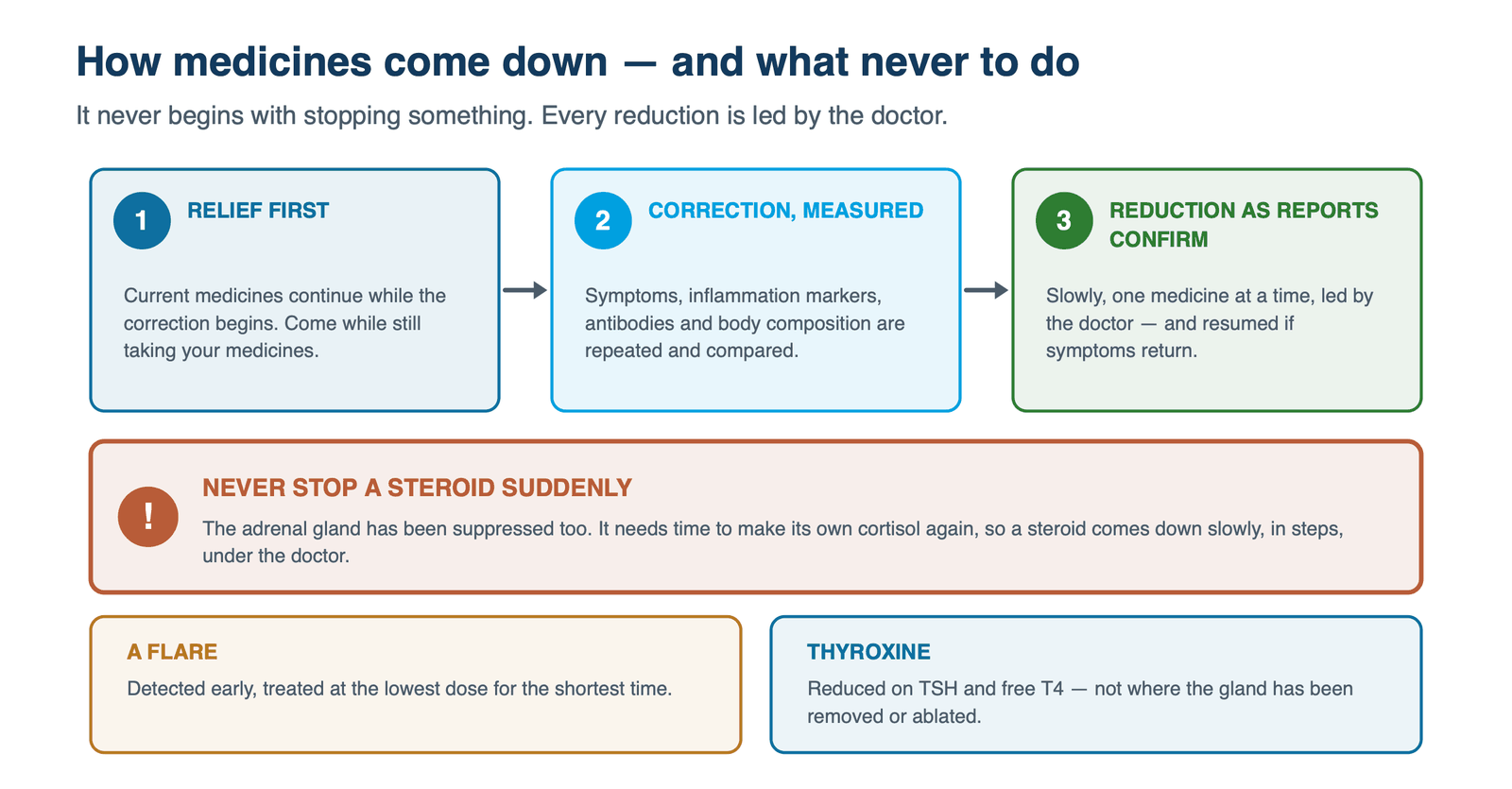
A flare is not failure, and it is not the patient's fault. Tiredness is often its first sign. Patients learn to recognise it early from their own symptoms and reports; the practice is tightened; and where needed, a medicine is taken at the lowest dose for the shortest time and stopped again. Where the practice has lapsed for long, a supervised correction is restarted for three to six months. A severe flare goes back under the specialist's care, with full treatment. "Health optimisation is not permanent. You should learn it and practise it."
11. What decides how far the body can repair
Lifestyle correction can only work through the body. Its limit is how effectively nutrition, activity, rest and freedom from toxins can be provided — and how much of the body is still able to respond. That is why the doctor and the patient need to understand, before the correction begins, what has already happened.
The damage already done. Inflammation that has run for years leaves scar. A joint that has eroded or fused, a kidney whose filters have scarred, a liver or lung that has fibrosed, a thyroid destroyed by the attack or removed by surgery or radioiodine — these are structure, and structure is not rebuilt by correcting the environment. What is still alive and working can be corrected and supported; what has been replaced by scar is worked around, alongside the treatment it needs.
The memory of the immune system. The cells that drive symptoms renew within days and weeks. The cells that remember the attack — long-lived memory cells, and the plasma cells that make antibodies — live for years. That is why antibodies fall slowly, why the remission has to be maintained, and why a flare can return long after the symptoms have gone.
Taking in nutrition. Optimal nutrition only counts if it reaches the cells. In autoimmune disease of the gut — coeliac disease, colitis, Crohn's — absorption itself is impaired, and some long-term medicines block what the diet supplies. Part of the assessment is finding these, and correcting them first.
The repair reserve. Damaged cells are replaced from the body's stem cells. That reserve is larger in the young and shrinks with age, long illness and long treatment. A body with more reserve repairs faster and further.
How fully the four domains are met — and time. Nutrition, activity, rest and toxin load reduction must be applied every day, measured and adjusted — not advised once. In advanced kidney failure, potassium, protein and water have to be restricted, so complete nutrition cannot be given. And cells are rebuilt over months: the active phase runs for the initial ninety days, or until body composition is corrected. Correction is the difficult part, needing intensive monitoring and support; maintaining it is easier.
12. Medicines, alongside
The sequence is fixed, and it never begins with stopping something. "You must come while you are still taking your medicines."
Relief first. Steroids, disease-modifying drugs, immunosuppressants, biologics and thyroxine continue as prescribed while the correction begins. Patients sometimes stop their medicines before coming, thinking they are changing treatment. That is never done.
Correction alongside, with frequent measurement. Symptoms, inflammation markers, the disease's own markers and body composition are repeated, and the measurements — not the calendar — set the pace.
Reduction as the reports confirm it. Once symptoms ease and blood parameters come right, the doctor reduces medicines slowly, one at a time, each in its own way — pain relievers first, then disease-modifying drugs in steps, then immunosuppressants. Every step is led by the doctor, and reversed if symptoms return. Why the order matters: in a trial of people with rheumatoid arthritis in stable remission, half of those whose medicines were simply stopped had relapsed within a year, against one in six who continued them. Reduction is safe when the body underneath has changed, and the reports show it has.
Steroids are never stopped suddenly. Long use suppresses the adrenal gland as well as the immune system, and it needs time to recover. Stopping a steroid abruptly — or even reducing it without a doctor — can bring on a crisis of its own. A steroid comes down last and slowest, on symptoms and reports together.
Thyroxine is reduced on the thyroid tests, never on how the patient feels: TSH and free T4 are repeated at set intervals, the dose is lowered in small steps, and tested again before each further change. One clear exception: where the thyroid has been removed by surgery or destroyed by radioiodine, thyroxine is lifelong replacement for a gland that is no longer there, and it continues. The same holds for insulin in type 1 diabetes: the cells that make it have been destroyed, and insulin continues.
Before a pregnancy, the thyroid is kept well controlled and the disease brought quiet under the doctor's care — thyroid hormone is never stopped to conceive.
Medicines that protect organs — anticoagulants after a clot, immunosuppressants protecting a kidney — are changed only together with the specialist who prescribed them, and only after a long period of stability.
Accepting or declining any treatment is the patient's and the family's decision, made with full information from the specialist and the lifestyle-correction doctor. The correction runs alongside whatever is chosen.
13. Is this modern medicine?
Yes, and the question deserves a direct answer because the field is crowded. CSLC-CAP is based on modern medicine. Lifestyle correction is the first step of disease management in modern medical practice; what is added here is that it is structured, supervised and measured rather than offered as advice. The tests are modern medical tests. The supervising doctors hold MBBS and MD qualifications. No ayurvedic, homeopathic or unani preparation is used. The aim — reducing the need for medication and surgical intervention — is a modern medical aim.
14. Watch the sessions
This topic — English. Autoimmune Disease: Is Lifelong Medication the Only Way? Lupus, RA, Psoriasis. Five patients' courses, from lupus at 22 to psoriasis at 33.
This topic — Malayalam. ഓട്ടോഇമ്മ്യൂൺ രോഗങ്ങൾ: ജീവിതകാലം മുഴുവൻ മരുന്ന് വേണോ? ആമവാതം, സോറിയാസിസ്, ലൂപ്പസ്. Thyroid, joints, skin, kidney, liver and gut — and the steroid rule in full.
The full live sessions. English, 5 August 2026: https://www.youtube.com/watch?v=UTS9PF3QfDs
Malayalam, 1 August 2026: https://www.youtube.com/watch?v=vTOH87ctLCU
The foundation — English. 90% of Medicines Are for Lifestyle Diseases — Can They Be Reversed?
The foundation — Malayalam. 90% മരുന്നുകളും ജീവിതശൈലി രോഗങ്ങൾക്ക്! മാറ്റാനാകുമോ?
15. Suitability
This suits a person who:
- is willing to make the correction, and to be measured
- is ambulant and clinically stable — not in a severe flare, and not needing hospital care
- has the physical capacity to perform the structured activity, at least lying down or seated
- has the mental capacity to learn and follow it
Where there is early dementia or memory impairment, this remains possible provided a close family member joins the programme, learns it, and supports the patient. Between the ages of 10 and 18, a parent joins.
Consultation. In person at Life Care Centre, Thevara, Kochi, or by telemedicine for patients outside Kerala and outside India. 📞 +91 94959 89534 · +91 94959 89534 · ✉️ contact@drjollythomson.org
16. Frequently asked questions
Is autoimmune disease curable?
No — and it is worth being plain about that. It can be brought into remission: symptoms settled, inflammation markers normal, medicines reduced or stopped. The remission then has to be kept, because the immune system remembers, and a flare can return if the old routine returns.
I am on a biologic, or on hydroxychloroquine. Can I still do this?
Yes. Every current medicine continues when the correction begins. Whether and when any of them comes down is decided later, on symptoms and reports, by the doctor.
My mother has rheumatoid arthritis. Will I get it?
Not necessarily, and not necessarily the same disease — autoimmunity runs in families as a tendency, and may appear as thyroiditis, psoriasis or vitiligo instead. The tendency is inherited; what triggers it largely is not. Keeping body fat down and muscle up, and limiting junk food, colours and preservatives, lowers the load. Thyroid antibodies are worth checking early.
Will my antibodies become negative?
Sometimes, especially when the disease is caught early, but they fall slowly and may not normalise. They are followed on repeat tests; they are not the only measure of how the body is doing.
What happens if it flares after the medicines come down?
It is detected early, from symptoms and reports, and treated at the lowest effective dose for the shortest time, while the practice is tightened. A flare is part of how the disease behaves, not a failure. But where the protocol is not followed, or the flare is severe, it goes back to full specialist treatment.
References
Incidence and co-occurrence of autoimmune disease in 22 million people — Conrad N, et al. Lancet 2023. doi https://doi.org/10.1016/S0140-6736(2300457-9
Pathogenesis of autoimmune disease — Pisetsky DS. Nat Rev Nephrol 2023. doi https://doi.org/10.1038/s41581-023-00720-1
Human autoimmune diseases, including twin concordance — Wang L, et al. J Intern Med 2015. doi https://doi.org/10.1111/joim.12395
XIST and female-biased autoimmunity — Dou DR, et al. Cell 2024. doi https://doi.org/10.1016/j.cell.2023.12.037
A second autoimmune disease after the first — Somers EC, et al. Am J Epidemiol 2009. doi https://doi.org/10.1093/aje/kwn408
Undetected thyroid disorders in adults in coastal central Kerala — Usha Menon V, et al. J Indian Med Assoc 2009. PMID 19585813
Hypothyroidism and thyroid antibodies in eight Indian cities — Unnikrishnan AG, et al. Indian J Endocrinol Metab 2013. doi https://doi.org/10.4103/2230-8210.113755
Adipokines — fat as an inflammatory organ — Ouchi N, et al. Nat Rev Immunol 2011. doi https://doi.org/10.1038/nri2921
Body mass index and rheumatoid arthritis — Qin B, et al. Arthritis Res Ther 2015. doi https://doi.org/10.1186/s13075-015-0601-x
Body mass index as a cause of psoriasis — Budu-Aggrey A, et al. PLoS Med 2019. doi https://doi.org/10.1371/journal.pmed.1002739
Weight loss and disease activity in psoriatic arthritis — Klingberg E, et al. Arthritis Res Ther 2019. doi https://doi.org/10.1186/s13075-019-1810-5
Lifestyle weight loss in psoriasis — Upala S, Sanguankeo A. Int J Obes 2015. doi https://doi.org/10.1038/ijo.2015.64
Coeliac disease in India — regional variation — Ramakrishna BS, et al. Am J Gastroenterol 2016. doi https://doi.org/10.1038/ajg.2015.398
Smoking, risk genes and rheumatoid arthritis — Klareskog L, et al. Arthritis Rheum 2006. doi https://doi.org/10.1002/art.21575
Smoking and lupus — Costenbader KH, et al. Arthritis Rheum 2004. doi https://doi.org/10.1002/art.20049
Sleep disturbance and inflammation — Irwin MR, et al. Biol Psychiatry 2016. doi https://doi.org/10.1016/j.biopsych.2015.05.014
Stress-related disorders and later autoimmune disease — Song H, et al. JAMA 2018. doi https://doi.org/10.1001/jama.2018.7028
The microbiome in autoimmune disease — De Luca F, Shoenfeld Y. Clin Exp Immunol 2019. doi https://doi.org/10.1111/cei.13158
Omega-3 in rheumatoid arthritis, meta-analysis — Wang W, et al. Clin Rheumatol 2024. doi https://doi.org/10.1007/s10067-024-07040-0
Turnover of the gut lining in humans — Darwich AS, et al. Drug Metab Dispos 2014. doi https://doi.org/10.1124/dmd.114.058404
Exercise and fatigue in rheumatoid arthritis — Rongen-van Dartel SA, et al. Arthritis Care Res 2015. doi https://doi.org/10.1002/acr.22561
Exercise in lupus — O'Dwyer T, et al. Semin Arthritis Rheum 2017. doi https://doi.org/10.1016/j.semarthrit.2017.04.003
Psoriatic arthritis among people with psoriasis — Alinaghi F, et al. J Am Acad Dermatol 2019. doi https://doi.org/10.1016/j.jaad.2018.06.027
Autoimmune disease and cardiovascular risk in 22 million people — Conrad N, et al. Lancet 2022. doi https://doi.org/10.1016/S0140-6736(2201349-6
Lupus, family planning and pregnancy (EULAR) — Andreoli L, et al. Ann Rheum Dis 2017. doi https://doi.org/10.1136/annrheumdis-2016-209770
Dose-related side effects of steroids — Huscher D, et al. Ann Rheum Dis 2009. doi https://doi.org/10.1136/ard.2008.092163
Relapse when tapering or stopping rheumatoid arthritis medicines (RETRO) — Haschka J, et al. Ann Rheum Dis 2016. doi https://doi.org/10.1136/annrheumdis-2014-206439
Management of rheumatoid arthritis (EULAR, 2025 update) — Smolen JS, et al. Ann Rheum Dis 2026. doi https://doi.org/10.1016/j.ard.2026.01.023
From this centre's clinical experience — not published. The easing of joint pain, itching, stiffness and gut symptoms within two to four weeks; the fall in hs-CRP within one to two months; the reduction, and in some patients the stopping, of thyroxine on repeat thyroid tests; thyroid antibodies returning to normal where the disease was caught early; the excess of fat for muscle seen even in lean patients with autoimmune disease; and the triggers of drift and flare.
About the author and the centre
Dr Jolly Thomson MBBS MD trained and practised in obstetrics, gynaecology and infertility treatment — MBBS (Government Medical College, Kottayam, 1981 batch), DGO and MD in Obstetrics and Gynaecology (Government Medical College, Thiruvananthapuram, 1989–1992). She practises today in a different field: clinically supported lifestyle correction — reversing lifestyle-related disease and optimising health. Where this article says in this practice or in this centre's experience, that is what it refers to: patients she has assessed, corrected and followed herself.
Where the method came from. Not from a laboratory. It came out of that reproductive practice — preconception care for the couple, mother and baby through pregnancy, childbirth, and mother and newborn afterwards. Where lifestyle was corrected in a structured way she saw better pregnancy rates, fewer miscarriages, and fewer complications. What worked before a pregnancy turned out to work in the lifestyle diseases themselves, and that is how the method reached the rest of the practice.
Life Care Centre, Thevara, Kochi is where the method is practised.
Important note
This article is general health education.
CSLC-CAP is a methodology and treatment for health optimization — to improve quality of life, and to reduce the need for medication and surgical interventions. It is delivered as an out-patient treatment with frequent telemedicine follow-up, under doctor supervision.
Written by the clinic for patients. It describes the clinic's approach and the cases it has seen; it is not individual medical advice. Treatment decisions are made in consultation. Medicines are reduced only under the supervision of the treating doctor. Never change or stop a medicine on your own.
Does this article describe your situation?
Write to us on WhatsApp with your name and what you are facing. A counsellor from the centre calls you back the same working day. Telephone consultations are available if you cannot travel.