
On this page
Abstract
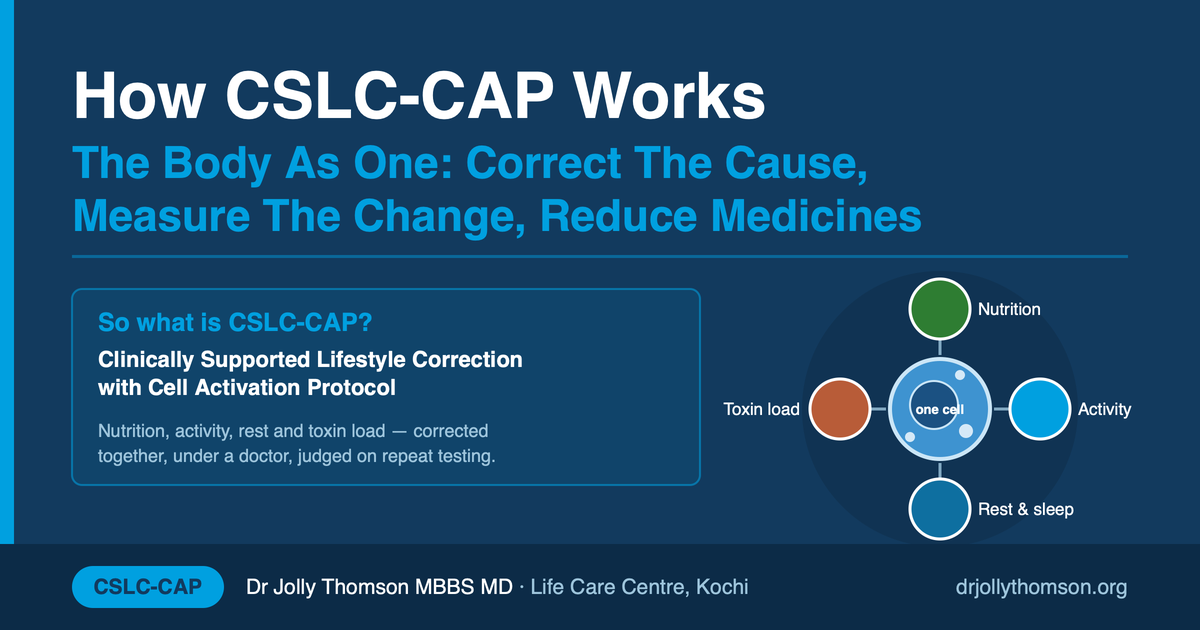
The medicine controls the number; the reason the number went wrong stays where it was, and so the medicine goes on for life, the count rises, and the next organ joins the list. Two kinds of care. Medical care treats what has appeared, and in an emergency nothing else will do. Health care asks what in this person's metabolism keeps producing it, and corrects that. What CSLC-CAP is. Clinically Supported Lifestyle Correction with Cell Activation Protocol is health care done in a clinical setting: the four things every cell depends on — nutrition, physical and mental activity, rest and sleep, and toxin load — are corrected together, under doctors (MBBS and MD), and judged on repeat testing and symptomatic relief. It is a treatment and, at the same time, a teaching: the patient learns to run the correction, so that nobody is kept a patient for life. Its purpose is to improve quality of life and to reduce the need for medication and surgical intervention. What is corrected. Not the disease that was named at the door, but the body that built it — the proportions of fat, water and nutrients in it, the high insulin, the inflammation that has stayed switched on, the chemical load the body cannot clear. Because the same few processes underlie most chronic conditions, several conditions move together. The 90 days. Ninety days of active correction, with the support tapered over the three months after and the practice maintained, because that is roughly how long the body's fast-renewing cells take to be replaced; the sugar and the pressure change within days, the symptoms within weeks, the body composition and the HbA1c over the three months. Medicines. Every medicine continues as prescribed when the correction begins; nothing is withdrawn to see what happens. Reduction follows the reports in conditions without symptoms and the symptoms in conditions with them, one medicine at a time, led by the doctor, with the patient's own specialist in the loop if needed. What does not hold itself. Stop the practice and the metabolism drifts back; drift is expected, is caught on the readings, and is not failure. Where it does not reach. An organ that has completely failed, a body on continuous oxygen or dialysis, an emergency — these are for medical care, and the correction, where it can help at all, runs alongside. Conclusion. For a lifestyle disease the lifestyle is the treatment. What this centre adds is the structure, the supervision and the measurement that turn advice into a treatment that can be followed, checked and taught.
1. Why the medicine never ends
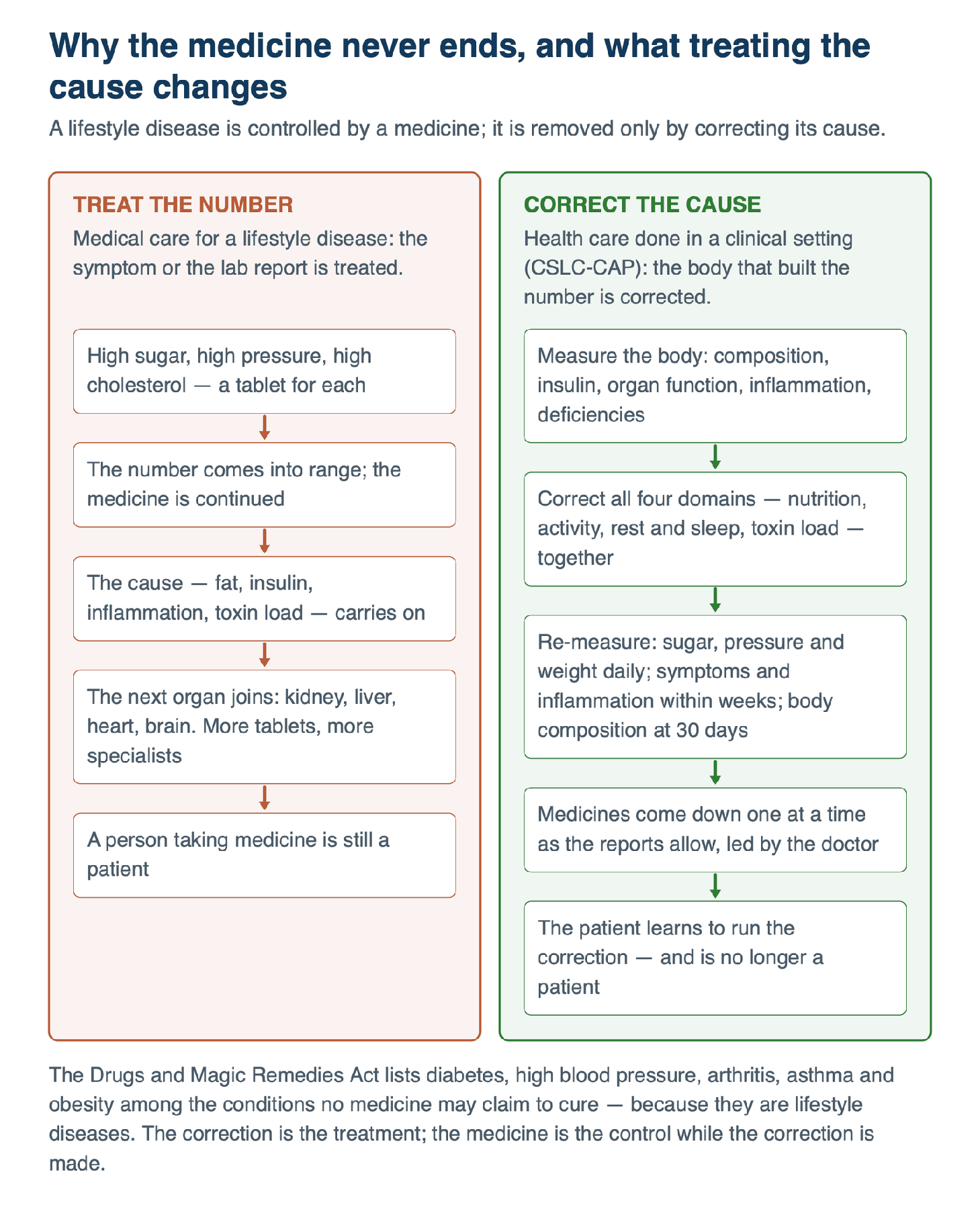
Modern medicine puts lifestyle correction first. Every guideline for diabetes, blood pressure, cholesterol or fatty liver begins with it; medicines are the second line and surgery the third, and each line carries more that cannot be predicted. In practice the first line is a sentence at the end of a consultation — control your food, lose weight, exercise — and nothing is measured afterwards. The patient has no idea what to eat or what exercise to do, tries, fails, and moves to the second line. From there the medicine does its job: it brings the sugar, the pressure or the cholesterol into range. It does not touch the reason the number went out of range.
India's own law says as much. The Drugs and Magic Remedies Act lists the conditions for which no medicine may be advertised as a cure, and diabetes, high blood pressure, arthritis, asthma and obesity are on it. They are listed there because they are lifestyle diseases: a medicine can control them, and only the correction of the cause can remove them. That is why the medicine is for life — and why the number of medicines grows. One tablet for the pressure becomes three; the diabetes tablets are joined by insulin; the cholesterol, the acidity, the pain and the sleep each get their own. Ten or fifteen medicines a day is no longer rare, and the interactions between them are a disease of their own. The body is damaged by the disease, and the body is damaged by the medicines too.
Meanwhile the cause carries on. Blood pressure treated with a pressure tablet is still working on the kidney, the heart, the liver and the brain; nobody says so, because each is another specialist's organ. One specialist is called, then a second, then a fourth. The disease arrives as a system and is treated as a list.
A person taking medicine is still a patient today. How long a patient stays a patient is a fair measure of what the treatment has not done.
2. One body, one cause
Nine out of ten people who come to this centre come naming one disease — the diabetes, the heart. Detailed assessment nearly always finds several more that have not yet announced themselves: fatty liver, a falling kidney filtration rate, early thickening of the artery wall, worn knees under the extra weight. They are not separate diseases. They are one derangement, reported by different organs.
Nature keeps the body to a set of proportions — so much water, so much oxygen, so much carbon, so much nitrogen, down to each element. The commonest derangement today is weight: being overweight means carbon accumulating as fat while the oxygen and the water in the body fall. Fat is not an inert store. When the stores under the skin are full, the surplus is laid down where it should not be — in the liver, around the heart, under the lining of the arteries — and fat in those places is an active, inflamed tissue.
Type 2 diabetes shows the mechanism clearly. Ninety per cent of the diabetes seen here is type 2, and in type 2 insulin is not lacking; in many it is higher than normal, and the diabetes medicines push it higher still. The problem is that the insulin is not working, because of the rising fat and a set of nutritional deficiencies underneath it. The treatment, meanwhile, aims at the glucose. The problem there is that the insulin is not working — but what are we treating? We are lowering the glucose. Everyone's complaint is tiredness, and the tiredness is the metabolism and the hormones out of balance.
The body is not made of medicine. It is made of the air we breathe, the water we drink and the food we eat, and it is built for mental and physical activity. Correct those, and the proportions can be corrected, and with them the disease that the proportions produced. The damage goes deeper than the number: a lifestyle disease begins as damage to cells and to the instructions in their DNA, and the lifestyle of the parents shapes the health of the children — which is why the correction is made for the household, and why it matters before a pregnancy as much as after a diagnosis.
3. The immune system, the body's own doctor
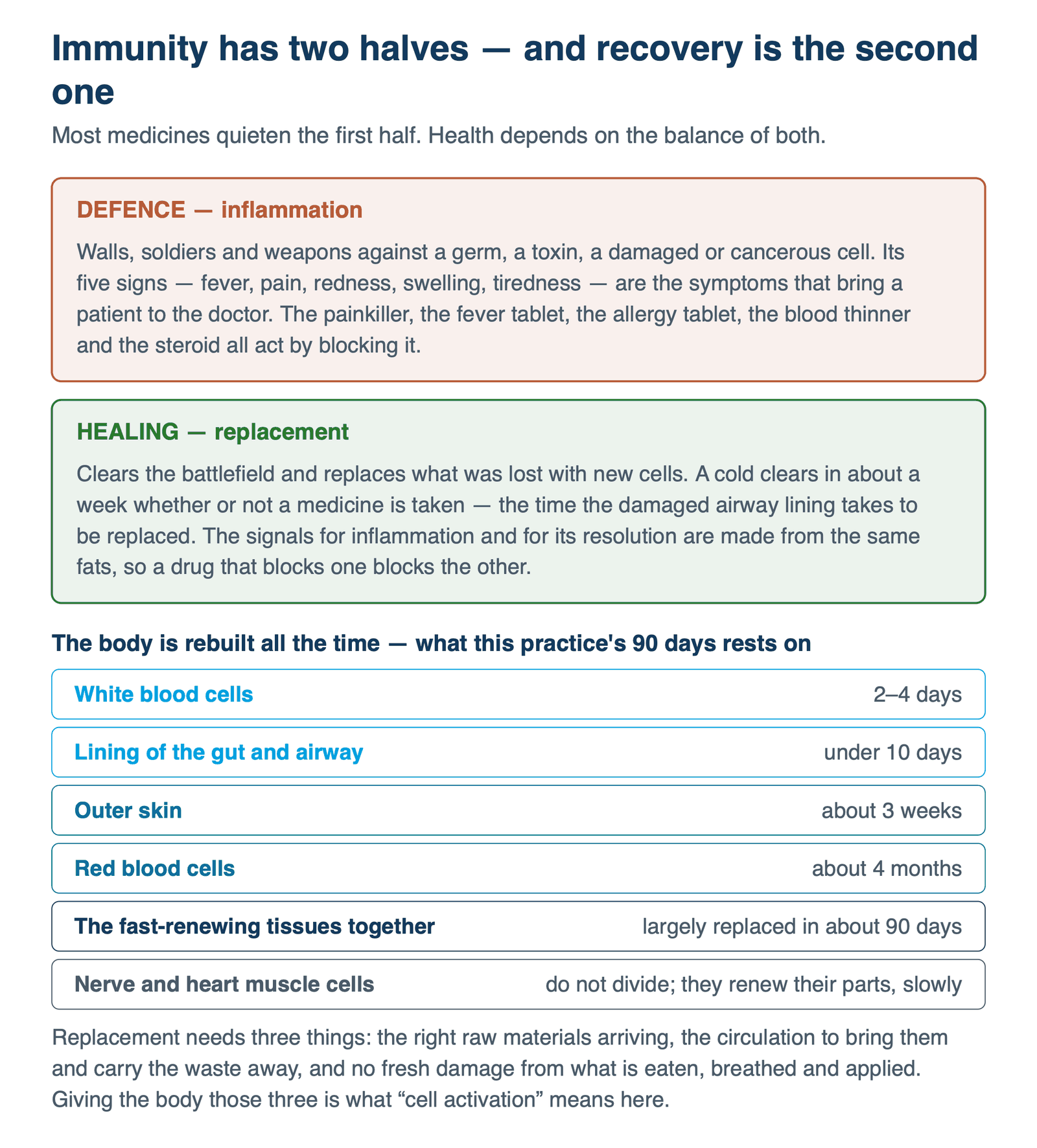
Immunity has two halves, and we usually think only of the first. The first is defence — inflammation: the walls, the soldiers and the weapons that deal with a germ, a toxin, a damaged or cancerous cell. The second is healing — the anti-inflammatory, rebuilding half that clears the battlefield and replaces what was lost with new cells. Recovery from any illness is the second half doing its work: a cold in a healthy person clears in about a week whether or not a medicine is taken, because that is how long the virus-damaged lining of the airway takes to be replaced. Health is the two halves in balance.
Most of the symptoms that bring a patient to a doctor are the defence half at work. Fever, pain, redness, a swelling or lump, and tiredness are the five signs of inflammation, and one or more of them is part of every disease. They are evidence that the body is defending itself — and most of the medicines we take, from the painkiller and the fever tablet to the allergy tablet, the blood thinner and the steroid, act by blocking that inflammation. In an emergency that is life-saving. Taken for years, it also blocks the healing that the same system is trying to do, because the signals for inflammation and for its resolution are made from the same raw materials, the omega-6 and omega-3 fats, and a drug that blocks one pathway blocks the other.
The healing half runs on replacement. An adult body of tens of trillions of cells is being rebuilt all the time: the white blood cells of the defence live two to four days; the cells lining the airway and the gut less than ten; the outer skin about three weeks; the red blood cells about four months. In three months a large part of the body's fast-renewing tissue has been replaced; the nerve cells, which do not divide, renew their parts instead. Disease resolves when the damaged cells have been replaced by healthy ones — and that replacement needs three things: the right raw materials arriving, the circulation to bring them and carry the waste away, and no fresh damage from what is being eaten, breathed and applied.
That is what "cell activation" means here. Not a stimulant and not a drug: the conditions under which the body's own repair can run — optimal nutrition, stimulation of every part of the body, and protection from toxins. The body's health is the sum of the health of its cells, and the approach was built, from its first explanation on the Malayalam channel in 2020, on three things — immunity, nutrients and exercise: instead of medicines that freeze the immune system, remove the lifestyle factors that keep inflammation high and bring the immune system back into balance, with medicines kept for when they are essential. Your immune system is your body's real doctor. The CSLC-CAP's work is to give it what it needs and to measure whether it is working.
4. What the name means
Clinically supported means it runs under a doctor and on measurements. Blood parameters and body composition are measured at the start, repeated through the programme, and each next step is decided on what they show. It is not advice given at the end of a consultation and never checked. It also means that the medicines are handled by the doctor, under monitoring, and never by the patient alone.
Lifestyle correction means the correction is made through nutrition, physical and mental activity, rest and sleep, and toxin load — not through a drug. Each of the four is assessed, prescribed, charted and re-measured, because correcting one while the other three stay wrong is why ordinary advice fails.
Cell Activation Protocol addresses delivery. Every correction made at the level of the whole body has to reach the cells, and that depends on circulation bringing nutrition in and carrying waste out. The structured activity used here — Oxyflex, a series of breath-regulated, segmental movements developed at this centre — drives that circulation segmentally, through the skeletal muscles, which are the only tissue the patient can command — and through them, the organs they supply. It is taught lying down or seated, so a breathless, frail or deconditioned patient can begin on day one.
Put together, in the words used on the Malayalam channel: it is a treatment, and at the same time it is a teaching. What is taught is how to manage one's own body — what its correct proportions should be, when disease comes, which food is ideal for this person and which to avoid, how to exercise, what care to take, and the body's own limits, the positive and the negative. The aim is a patient who can do it alone. It is not about keeping a person a patient for their whole life.
5. Medical care and health care — where CSLC-CAP sits
Medical care treats what has appeared: the infection gets an antibiotic, the fracture a plaster, the blocked artery a stent, the failed kidney a dialysis machine. Each is correct, often necessary, and sometimes urgent. In an accident with bleeding, in a multi-system infection, in a diabetic coma, the surrounded bed with its specialists and equipment is exactly what is needed, and it saves life. Health care asks a different question: once the life is saved, what is basically needed is to make the patient not a patient — and that has to be done at home, every day, with help.
CSLC-CAP is health care, done in a clinical setting. It is not an alternative to medical care; it is the part of modern medicine that the curriculum teaches as a principle and the hospitals or the doctors rarely have time to deliver, where priority goes to emergency care.
Table 1. Medical care and health care: complementary, not competing
| Aspect | Medical care | Health care (CSLC-CAP) |
|---|---|---|
| Primary aim | Diagnose and control the disease and its events | Correct and support the metabolism underneath, so the body can repair |
| Main tools | Medicines, procedures, surgery, specialist management | Optimal nutrition, activity, rest, a low-toxin environment |
| Focus | The organ that complained, and its number | The whole body — its proportions, insulin, fat, inflammation |
| Timing | Once disease has appeared | Upstream and ongoing, guided by repeat testing |
| Measure of success | Symptoms controlled, reports within range | Symptoms relieved and reports within range with fewer medicines |
| The patient's role | Receives the treatment | Carries out the correction every day, with the doctor |
| Supervision | Modern-medicine doctors | Modern-medicine doctors |
6. What is assessed
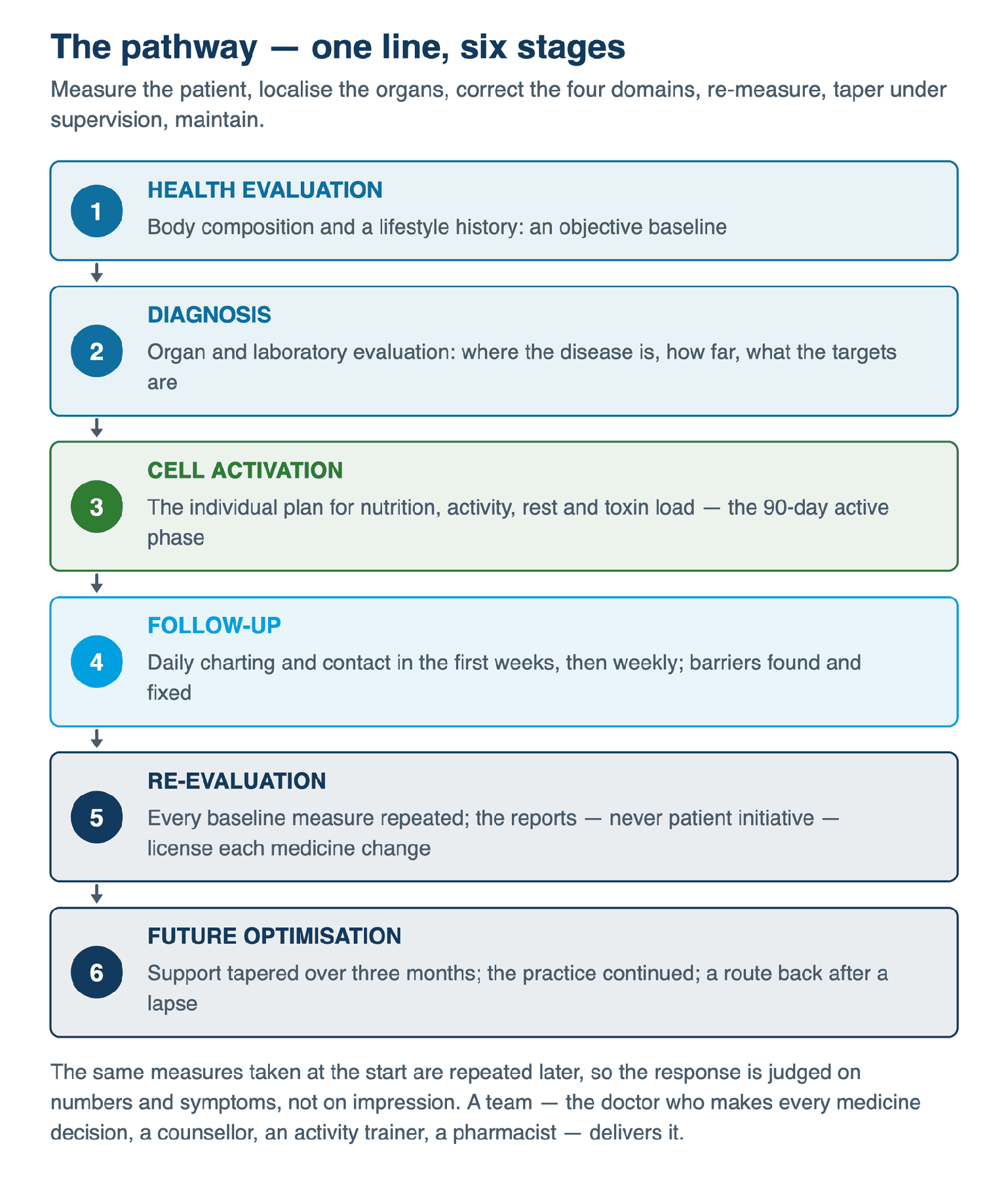
The assessment is deliberately objective and repeatable, because the same measures taken at the start are repeated later to judge the response. Three things are established before anything is corrected.
The body's composition. Fat mass, lean mass, visceral fat, the lean-to-fat ratio and an estimated body age, alongside height, weight and waist. The ratio of fat to lean tissue is the number the correction works on; the weight on the scale is only a proxy for it.
Where the disease is, and how far it has gone. Blood sugar and HbA1c together with insulin — and, in anyone on insulin injections, C-peptide, which shows whether the pancreas is still producing its own. Lipids; liver and kidney function including urinary albumin; the markers of inflammation; homocysteine; thyroid; the micronutrients that are commonly short — vitamin D, B12, folate, magnesium; autoimmune antibodies where the picture calls for them. Imaging where it changes the plan — an ultrasound of the liver, a carotid scan of the artery wall — and the investigations that use dye or radiation are avoided where another test will do.
The individual's lifestyle, mapped. Diet, activity, sleep, stress and the exposures of the household, and the foods this person tolerates and does not; food-intolerance or allergy profiling where indicated. Two people with the same diagnosis do not get the same correction.
From this the doctor can say where the disease is coming from, which organs are involved and how far, what the targets are, and whether this person is suitable (section 17). The plan is then written for that body, not for the diagnosis.
7. What is corrected: the four domains
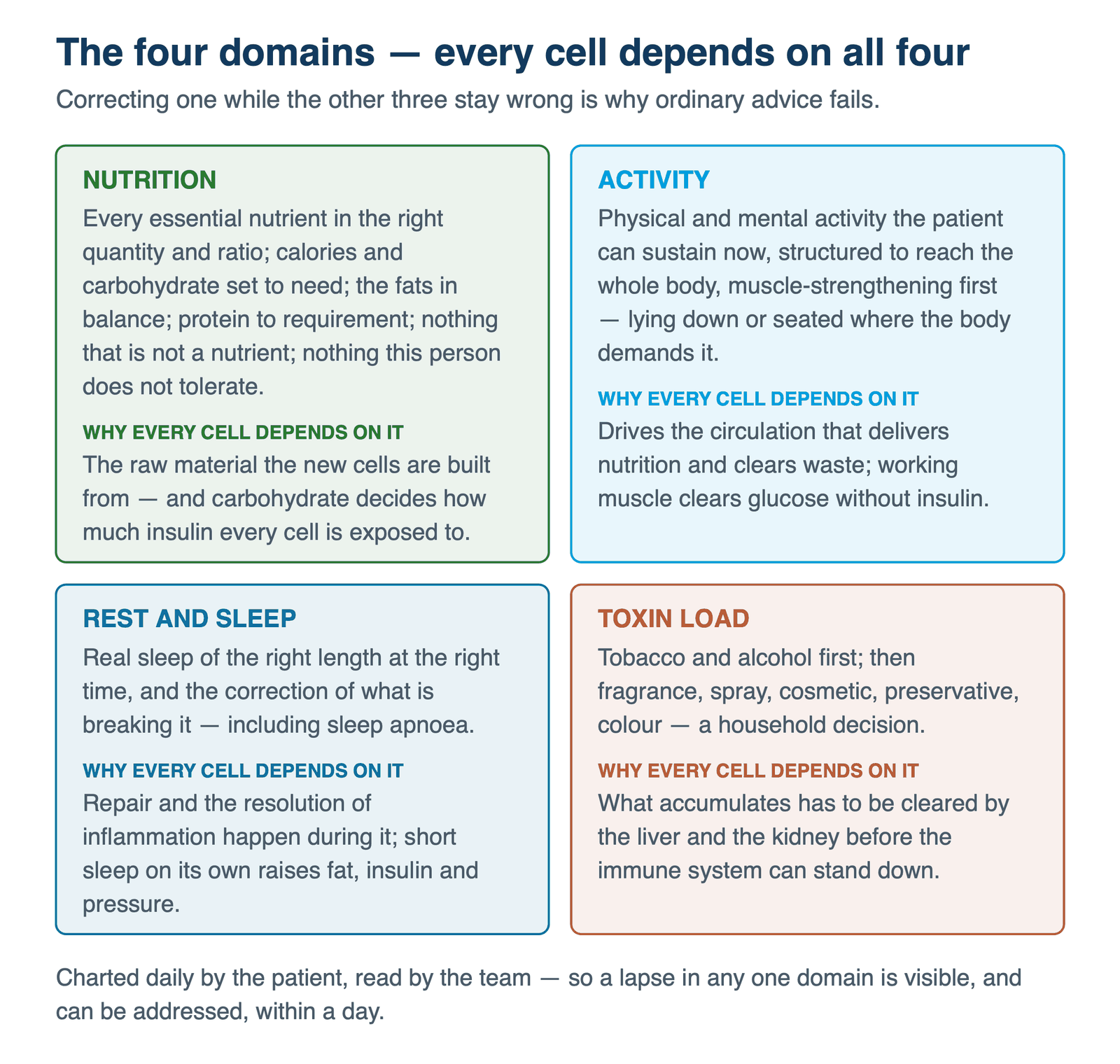
Lifestyle is not one thing. Every cell depends on four, and the reason ordinary advice fails is that it corrects one or two, partially — usually some change in food or exercise — while the others stay uncorrected.
Table 2. The four domains
| Domain | What it means | Why every cell depends on it |
|---|---|---|
| Nutrition | Every essential nutrient in the right quantity and ratio; calories and carbohydrate set to need, so that the body draws on its stored fat; the omega-6 to omega-3 balance brought back towards the roughly equal ratio the body evolved on; protein to requirement, not in excess; nothing in surplus; nothing that is not a nutrient — preservatives, colours, flavours, additives — and nothing this person has been found not to tolerate | It is the raw material the new cells are built from, and carbohydrate decides how much insulin every cell is exposed to |
| Activity | Physical and mental activity the patient can actually sustain now, structured to reach the whole body segmentally (Oxyflex), with the muscle-strengthening part first — lying down or seated where the body demands it | It drives the circulation that delivers nutrition and clears waste; working muscle clears glucose without insulin; and the hormones that muscle, bone and fat release when they are used are what keep the brain and the glands in order |
| Rest and sleep | Real sleep, of the right length and at the right time, and the correction of what is breaking it — including the sleep apnoea that so often comes with weight | Repair and the resolution of inflammation happen during it; short or broken sleep on its own raises fat, insulin and pressure |
| Toxin load | Tobacco and alcohol first; then the chemical burden of the day — fragrance, spray, cosmetic, preservative, colour — treated as a household decision, not an individual one | What accumulates has to be cleared by the liver and the kidney before the immune system can stand down; the skin and the mouth absorb what is put on them |
Three corrections in the nutrition domain are made explicitly: the deficiencies found at assessment are corrected and re-checked; the fatty-acid balance is restored, because the pro-inflammatory signals and the pro-resolving ones are both made from these fats; and the non-nutritive load is removed, not merely reduced, because that simplifies every decision the patient has to make. Only the calories — the carbohydrate and the saturated fat — should come down. Everything else must be received.
The activity is designed for the person it is meant for. Walking and the gym strain the parts that are already strained in an overweight or arthritic body and leave the rest untouched. Oxyflex — a segmental routine that works the major muscle groups in sequence with the breath regulated, most of it performed lying down or seated on a mattress, with no equipment and no special space — lets a frail, breathless or elderly patient build muscle without load; after the initial training it needs no supervision to practise. Body composition, less fat and more muscle, is the aim, not weight alone.
Adherence is not inferred at the next review. It is recorded daily across all four domains on a chart the patient keeps and sends, so a lapse in any one of them is visible and can be addressed within a day. The household changes with the patient where it must, a family member joins where the patient needs support, and simple rules replace calorie counting.
8. Why the first 90 days
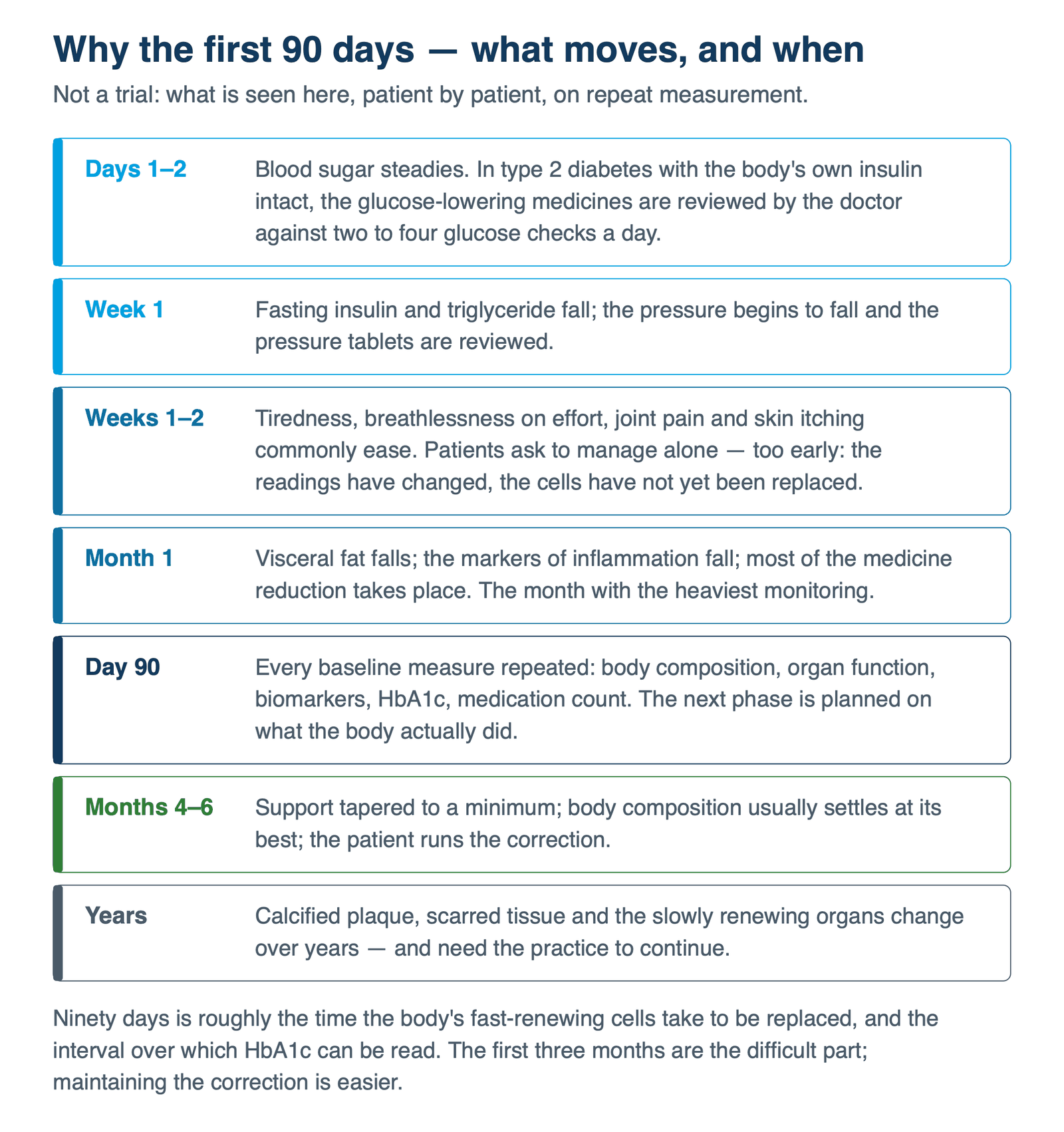
The active phase runs for the first ninety days, or until body composition is corrected, whichever comes first. Ninety days is not a round number chosen for convenience. It is roughly the time over which the body's fast-renewing cells — the immune cells, the linings of the gut and the airway, the skin, the blood — are replaced, and it is the interval over which markers such as HbA1c, which reads the sugar of the previous two to three months, can be interpreted. The slowly renewing tissues take longer, and the support is tapered over the following three months, and then goes into a maintenance phase, with or without clinical support depending on the patient's particulars and interest.
The results are not slow; they are faster than the conventional treatment methods, and that is easily felt and understood by those on chronic medication. In this practice the blood sugar steadies within a day or two, the pressure within a week in many, the insulin and the triglyceride within the first week. People think it will take a long time to get noticeable results with lifestyle correction. The symptomatic relief and the normalisation of abnormal reports are much faster in most patients, especially those on chronic medication, and the speed with which the medication dose can be reduced is faster than a medical professional or a patient would think. When the symptoms are gone and the medications have been tapered off within a few weeks or a month or two, some patients start thinking they can manage without support and ask the doctor: let me manage myself. The answer is no: the readings have changed, the cells have not yet been replaced, and the metabolic disorders in the body that produced the disease are still there. The first three months are the difficult part, with intensive monitoring and support, because that is when the correction is made. Maintaining it is easier.
What the three months look like, in this practice. The first week: sugar, pressure and insulin move, and the first medicines are reviewed. The first month: symptoms ease, inflammation falls, visceral fat comes down, and most of the medicine reduction takes place — this is the month with the heaviest monitoring. Ninety days: the repeat of every baseline measure — body composition, organ function, biomarkers, medication burden — and a plan for the next phase built on what the body actually did. Three months more: the support tapered; the practice continued for life.
9. How the medicines come down
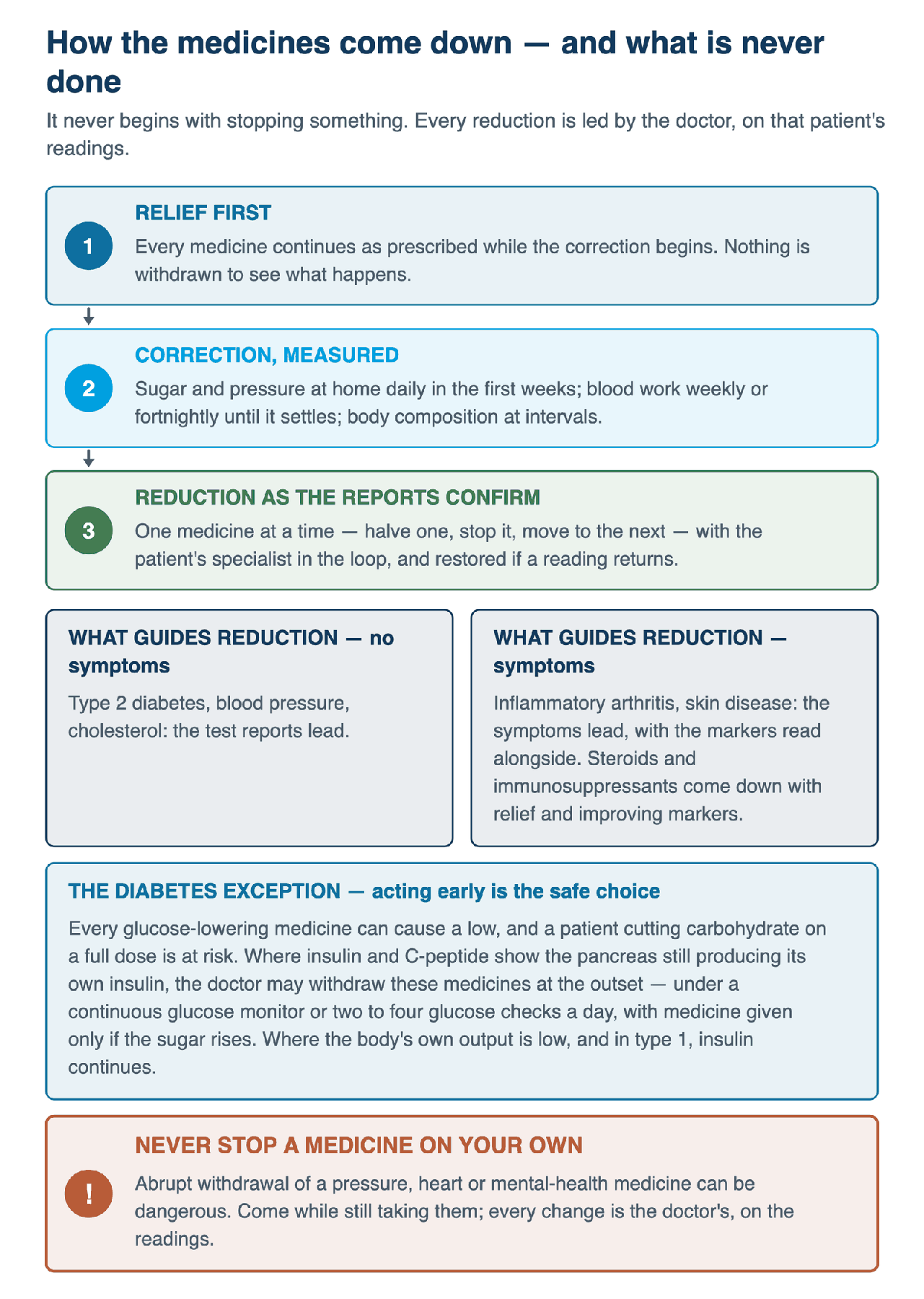
The sequence is fixed, and it never begins with stopping something. Patients sometimes stop their medicines before coming, thinking they are changing treatment. That is never done — abrupt withdrawal of a pressure, heart or mental-health medicine can be dangerous.
Relief first. Every medicine the patient is already taking continues unchanged when the correction begins; nothing is withdrawn to see what happens. The correction starts alongside the medicines, under monitoring: in the first weeks the patient reports to the team every day, with sugar and pressure readings taken at home.
Reduction as the reports confirm it. Reduction is considered only when objective re-evaluation supports it, and it proceeds one medicine at a time: a patient on four pressure tablets does not reduce them together, but halves one, stops it, and moves to the next, with the pressure and the pulse watched throughout. If a parameter reverts, the dose is restored. In conditions without symptoms — type 2 diabetes, blood pressure, cholesterol — the test reports are the guide. In conditions with symptoms, such as inflammatory arthritis, the symptoms lead, with the inflammatory markers read alongside rather than used as a gate, because they vary between patients. Steroids and immunosuppressants are reduced with symptomatic relief and improving markers, because suppressing inflammation also suppresses the repair the programme is trying to enable.
Diabetes medicines follow the sugar — with a safety reason for acting early. Every glucose-lowering medicine can cause a low. A patient who is cutting carbohydrate while still taking the full dose of a sulphonylurea or of insulin is at risk of hypoglycaemia — giddiness, tremor, and worse — and a patient on those medicines can never control food, because the medicine keeps producing hunger. So in type 2 diabetes the doctor first establishes, from the insulin and C-peptide, that the pancreas is still producing its own insulin. Where it is, the glucose-lowering medicines may be withdrawn by the doctor at the outset, under intensive monitoring — a continuous glucose monitor or two to four glucose checks a day — with medicine given only if the sugar rises. The target is a sugar around 100 and below 140. Closely monitored; we are not doing it blind. Where the pancreas's own output is low, and in type 1 diabetes, insulin continues and is adjusted to the lifestyle.
Craving days and emergencies are planned for. A specific medicine from the appropriate group is prescribed for a deviation — a feast, travel, hotel food — for that time only; and a small kit for acidity, gas, pain or a sprain is taught, so that a minor event does not become a hospital visit.
Who decides. Every step is led by the doctor here, on that patient's readings, and reversed if the readings return; the patient's own cardiologist, nephrologist or psychiatrist who prescribed the medicine is kept in the loop. Medicines are brought down with directions from the doctor, when the patient is convinced by the evidence — the reports and the symptoms. The first month is when most reduction takes place, but not every medicine is reduced within it in every patient; reduction and tapering off depend on the patient's particulars.
10. One effort, several specialities
Because the correction acts on the shared processes — insulin, fat, inflammation, toxin load — a patient with diabetes, blood pressure, fatty liver and arthritis follows one programme rather than four, and the changes in each are watched in parallel. The same logic reaches beyond the metabolic diseases: recovery from an infection depends on the lifespan and strength of the immune cells, recovery from an injury on the healing half of immunity, the pace of ageing on the reserve of stem cells, and the diet-related diseases of reproduction, the brain and nerves, inflammation and body weight on the same nutrients, fats, salts and stimulation — in every group the lever is a property of the cell, not a drug. Patients advised a stent or a bypass, a knee replacement; patients with psoriasis or eczema of ten and twenty years, with psychiatric illness since the teens, with rheumatoid arthritis on years of immunosuppressants and steroids and a liver that has suffered for it — all are treated here with the same protocol, because what differs between them is the organ that complained, not the cause.
A man with failing kidneys, and one procedure too many. Diabetic and hypertensive for years, with a kidney problem known for three and a creatinine just over 1, he had a chest pain and was sent for an angiogram. His creatinine before the dye was just over 2. After it, 8 — stage 5 kidney failure — and it was brought back only to 4. The angiogram had shown no block; the chest pain was a small rib injury. A year later, another chest pain, more hospital medicines, creatinine 8 again, a central line and emergency dialysis, and a second angiogram now showing three-vessel disease; today he is on dialysis three days a week and a bypass is being attempted on dialysis. The cardiologist thought of the heart and the nephrologist of the kidney, and nobody of the whole body. It is nobody's fault; it is the specialisation. Many hospitals would avoid the dye in a kidney patient; the question was never asked. The lesson is not about one hospital. Correction is not something to be looked at when two organs have already failed. One organ in partial failure can be maintained or brought back to some extent. At least think earlier, and before an angiogram check the kidney.
A man in his fifties after a stroke. Diabetic and hypertensive, he came for correction after the stroke, which had mainly affected his memory. Within a month all his medicines could be stopped by the doctor on his readings; by his ninetieth day he was doing all his work correctly, and the memory had cleared. Age or disease itself is not a bar, if a base of health remains.
11. What the measurements show
In this practice the same sequence is seen across conditions, and it is what section 8 is built on.
Within days: sugar, insulin, pressure. Blood sugar steadies within one to two days; fasting insulin and triglyceride fall within the first week; the pressure begins to fall in the first week and the pressure tablets are reviewed as it does.
Within weeks: symptoms and inflammation. Tiredness, breathlessness on effort, joint pain and skin itching commonly ease within one to two weeks. The markers of inflammation fall within the first one to two months. When the medicines come down, the kidney, the liver and the whole system get a rest: in this practice a creatinine of 4 has gone to 3 and a filtration rate of 30 to the forties and fifties — and at that point dialysis need not be thought of.
In the first month: visceral fat and medicines. Visceral fat falls in the first month, and most of the medicine reduction happens in it, in the order of section 9.
At three months: body composition and the HbA1c. The repeat of every baseline measure. Body composition and the HbA1c settle; the vascular age on a carotid scan comes down where it was raised; fatty liver grades down on ultrasound. At six months body composition usually settles at its best.
Over years: the slow tissues. Calcified plaque, scarred tissue and the slowly renewing organs change over years, not months, and need the practice to continue.
This is not a trial. This is what is seen in clinical practice. The published trials point the same way — supervised lifestyle programmes have put type 2 diabetes into remission and kept it there for years, reversed the narrowing of coronary arteries, and reduced pressure medicines without loss of control in selected patients — and what this centre reports is its own experience with its own patients, under its own measurement. A formal evaluation of the programme's outcomes is the next step, and this centre has said so in print.
12. Where it does most and where it does least
Lifestyle correction can only work through the body. Its limit is how fully nutrition, activity, rest and freedom from toxins can be provided — and how much of the body is still able to respond.
The damage already done. A kidney at stage 5, a patient already on dialysis through a central line, a heart in failure, end-stage cancer — these can be controlled, not reversed, and the people who carry them need continued medical treatment. A kidney with a creatinine of 3 or 4, even 5 or 6, before dialysis, where that is the only system that has failed, can be tried, and the earlier the better. Heart muscle that died in an attack is scar, and scar does not become muscle; a calcified plaque clears slowly; a kidney scarred by years of diabetes and dye recovers only what is still alive. What is still healthy can be corrected and supported; what has been replaced by scar is worked around, alongside the treatment it needs. The earlier the better; before even one organ has completely failed, most patients can leave medicine.
Taking in nutrition. Optimal nutrition only counts if it reaches the cells. Gut disease, low stomach acid with age, and some long-term medicines block what the diet supplies; finding and correcting these is part of the assessment.
The repair reserve. Damaged cells are replaced from the body's reserves, and that reserve shrinks with age, long illness and long treatment. A body with more reserve repairs faster and further; an eighty-year-old can respond, and does, but from a smaller reserve.
How fully the four domains are met — and time. The correction must be applied every day, measured and adjusted, in all four domains. The result depends on how well the patient understands and follows the protocol, and on the support of the family.
13. The correction does not hold itself
The benefit lasts as long as the practice does. When the old routine returns — travel, a family problem, a wedding season, an infection, the end of supervision — the metabolism drifts back with it. The triglyceride and the sugar show it first, within days of the carbohydrate creeping back; the body composition and the organ markers show it by the next review.
Drift is therefore expected, and it is not failure. Patients learn to recognise it from their own readings; the practice is tightened; a short course of medication is used where needed; and where the practice has lapsed for long, a supervised correction is restarted for three to six months. After the active phase those who can manage themselves do, and those who want continued support have it. Nobody is kept a patient for life, and nobody is sent away without a route back.
14. Why going it alone fails
Most patients have tried. A woman who came two years ago but could not join because of family troubles tried on her own: she lost four kilos, then six or seven, and then could not go on — her hair began to fall and the tiredness set in. She had controlled the food without the nutrition. That is the usual story: a self-made restriction cuts everything, not only the calories, so the weight comes off and then the deficiency arrives as hair loss, fatigue, a fever, an illness. A wrongly built ketogenic diet, heavy in protein, raises uric acid and precipitates stones in the kidney. And a patient on many medicines — for the heart, the sugar, the pressure, the blood — gets acidity that feels like hunger, so the food control fails before it has begun.
Clinically supported correction measures how much fat this patient has and how much must go, how much muscle there is and whether it must be built, which foods this body reacts to, what the plan is at three months and at six, and how to manage afterwards. Is there not a great difference between building with everything planned and just adding one room after another? That planning and that support are why the results come fast, and why they hold.
15. Is this modern medicine?
Yes, and the question deserves a direct answer because the field is crowded. CSLC-CAP is based on modern medicine. Lifestyle correction is the first step of disease management in modern medical practice — every guideline begins with it; what is added here is that it is structured, supervised and measured rather than offered as advice. The tests are modern medical tests. The supervising doctors hold MBBS and MD qualifications. No ayurvedic, homeopathic or unani preparation is used. The aim — reducing the need for medication and surgical intervention — is a modern medical aim.
It was developed here, in Kochi, out of a reproductive practice and the medical colleges of Kottayam and Thiruvananthapuram, and set into a protocol with what the age of the internet puts at every doctor's fingertips. It is counted as a different methodology within modern medicine, not as something outside it.
16. Watch the sessions
The foundation — Malayalam. 90% മരുന്നുകളും ജീവിതശൈലി രോഗങ്ങൾക്ക്! മാറ്റാനാകുമോ? Fourteen minutes on why the medicines never end.
The foundation — English. 90% of Medicines Are for Lifestyle Diseases — Can They Be Reversed?
This topic — Malayalam. വർഷങ്ങളായി മരുന്ന് കഴിക്കുന്നു പക്ഷെ രോഗം മാറുന്നില്ലേ? ഇതാണ് കാരണം — Treatment vs Biology Correction. The full live session of 18 April 2026, with an English audio track: CSLC-CAP defined, the whole-body argument, type 2 diabetes, the 90 days, and the patients of section 10.
This topic — Malayalam. Diabetes Type 2 പ്രമേഹം മാറ്റാനാകുമോ? എന്താണ് CSLC-CAP? The live session of 25 April 2026.
The course — Malayalam. ഡോക്ടറേക്കാൾ അറിവുനേടാം — eleven parts, from health care versus disease care, through immunity, food and exercise, to the cell activation approach. Start with Part 1; the playlist runs on from there.
17. Suitability
This suits a person who:
- is willing to make the correction, and to be measured
- is ambulant and clinically stable
- has the physical capacity to perform the structured activity, at least lying down or seated
- has the mental capacity to learn and follow it, or a close family member who joins, learns it and supports the patient
- is an adolescent of 10 to 18 with a parent taking part; children under ten are not usually enrolled
It is not suitable for a person:
- in a medical emergency — an accident, a severe infection, a diabetic coma, a heart attack or unstable angina — until the emergency treatment is complete
- who needs continuous oxygen
- with end-stage failure of an organ — late stage 5 kidney failure, established dialysis, heart failure with a severely weakened pump, end-stage liver disease
- with end-stage cancer, or under active cancer treatment
- unable to do even mild activity seated or lying down
Where a procedure is clearly needed, the correction runs alongside it. Accepting or declining any test or treatment is the patient's and the family's decision, made with full information from the treating specialist and the lifestyle-correction doctor.
Consultation. In person at Life Care Centre, Thevara, Kochi, or by telemedicine for patients outside Kerala and outside India. 📞 +91 94959 89534 · +91 94959 89534 · ✉️ contact@drjollythomson.org
18. Frequently asked questions
Is this a diet?
No. A diet changes one of the four domains and leaves the other three — and the measurements — alone. Here the nutrition is set to need and made complete, the activity is prescribed and taught, the sleep and the toxin load are corrected with it, and all four are charted daily and judged on repeat tests under a doctor. That is the difference between advice and a treatment.
I take fifteen medicines. Will I be asked to stop them?
Never on your own. Every medicine continues as prescribed when the correction begins. As the reports and the symptoms change, the doctor here reduces them one at a time, with your own specialist in the loop, and restores any dose if a reading returns. In this practice patients on ten, twenty or more medicines have come down to one or two, and in some cases to none.
I have several diseases. Which one is treated?
All of them, with one programme, because they are one derangement reported by different organs. Diabetes, blood pressure, fatty liver, kidney strain, sleep apnoea and arthritis move together when the metabolism is corrected, and each is monitored in parallel.
I am outside Kerala. Can I take part?
Yes. The initial consultation and assessment can be done by telemedicine, which is convenient for those staying far away; direct consultation and assessment at the centre follow before the treatment protocol starts. The follow-up through the programme combines visits with telemedicine contact, so patients outside Kerala and outside India do take part; what suits you is decided at the consultation.
Is it too late for me?
Not if a base of health remains. Age is not a bar; patients in their eighties also join the programme, come out of medications, avoid surgeries and gain a better quality of life. What decides it is how far the organs have gone: one organ in partial failure can be maintained or brought back to some extent, two organs failed is very difficult, and an organ that has completely failed is for medical care, with the correction alongside where it can help.
What happens after the ninety days?
The support is tapered over the next three months and the practice continues for life. Those who can manage themselves do; those who want continued support have it; and anyone who drifts has a route back — a supervised correction restarted for three to six months.
Related reading
- Heart blockage and artery disease: finding it early, reversing vascular age
- Autoimmune diseases: rheumatoid arthritis, lupus, psoriasis, thyroiditis and colitis
- Prostate disorders: BPH, prostatitis and prostate cancer
- Lung disease: asthma, allergies, ILD, COPD, fibrosis
- Delay ageing, reverse ageing: body age and vascular age
- Mental disorders: the root cause beneath the chemistry
- Planning a pregnancy: the 90 days before
- Kidney disease: protecting renal function before dialysis
- Psoriasis and psoriatic arthritis
- Weight-loss injections and diabetes
- Fatty liver: reversing liver fat and fibrosis
- Arthritis: reducing medication and the need for surgery
- Cancer: health optimization alongside oncology care
- Age-related lifestyle diseases: reversing insulin resistance
References
Thomson J. Operationalising lifestyle correction in routine outpatient care: implementation of the Clinically Supported Lifestyle Correction with Cell Activation Protocol (CSLC-CAP). Preprints. 2026. doi https://doi.org/10.20944/preprints202610.1316.v1
Sender R, Milo R. The distribution of cellular turnover in the human body. Nat Med. 2021;27(1):45-48. doi https://doi.org/10.1038/s41591-020-01182-9
Spalding KL, Bhardwaj RD, Buchholz BA, Druid H, Frisén J. Retrospective birth dating of cells in humans. Cell. 2005;122(1):133-143. doi https://doi.org/10.1016/j.cell.2005.04.028
World Health Organization. Noncommunicable diseases. Fact sheet, 25 September 2025. link https://www.who.int/news-room/fact-sheets/detail/noncommunicable-diseases
GBD 2023 Disease and Injury and Risk Factor Collaborators. Burden of 375 diseases and injuries, risk-attributable burden of 88 risk factors, and healthy life expectancy in 204 countries and territories, 1990-2023. Lancet. 2025;406(10513):1873-1922. doi https://doi.org/10.1016/S0140-6736%2825%2901637-X
Riddle MC, Cefalu WT, Evans PH, et al. Consensus report: definition and interpretation of remission in type 2 diabetes. Diabetes Care. 2021;44(10):2438-2444. doi https://doi.org/10.2337/dci21-0034
Lean ME, Leslie WS, Barnes AC, et al. 5-year follow-up of the randomised Diabetes Remission Clinical Trial (DiRECT) of continued support for weight loss maintenance in the UK: an extension study. Lancet Diabetes Endocrinol. 2024;12(4):233-246. doi https://doi.org/10.1016/S2213-8587%2823%2900385-6
Simopoulos AP. The importance of the ratio of omega-6/omega-3 essential fatty acids. Biomed Pharmacother. 2002;56(8):365-379. doi https://doi.org/10.1016/s0753-3322%2802%2900253-6
Serhan CN, Bäck M, Chiurchiù V, et al. Expert consensus report on lipid mediators: role in resolution of inflammation and muscle preservation. FASEB J. 2024;38(10):e23699. doi https://doi.org/10.1096/fj.202400619R
Lane MM, Gamage E, Du S, et al. Ultra-processed food exposure and adverse health outcomes: umbrella review of epidemiological meta-analyses. BMJ. 2024;384:e077310. doi https://doi.org/10.1136/bmj-2023-077310
Bull FC, Al-Ansari SS, Biddle S, et al. World Health Organization 2020 guidelines on physical activity and sedentary behaviour. Br J Sports Med. 2020;54(24):1451-1462. doi https://doi.org/10.1136/bjsports-2020-102955
Chaput JP, McHill AW, Cox RC, et al. The role of insufficient sleep and circadian misalignment in obesity. Nat Rev Endocrinol. 2023;19(2):82-97. doi https://doi.org/10.1038/s41574-022-00747-7
Sheppard JP, Burt J, Lown M, et al; OPTIMISE Investigators. Effect of antihypertensive medication reduction vs usual care on short-term blood pressure control in patients with hypertension aged 80 years and older: the OPTIMISE randomized clinical trial. JAMA. 2020;323(20):2039-2051. doi https://doi.org/10.1001/jama.2020.4871
Ornish D, Scherwitz LW, Billings JH, et al. Intensive lifestyle changes for reversal of coronary heart disease. JAMA. 1998;280(23):2001-2007. doi https://doi.org/10.1001/jama.280.23.2001
From this centre's clinical experience — not published. The sequence of change — sugar within one to two days, insulin and triglyceride within the first week, pressure within the first week, symptoms within one to two weeks, inflammatory markers within one to two months, visceral fat within the first month, body composition and HbA1c at ninety days; the medicine sequence and the first month as the month of most reduction; creatinine and filtration rate improving as the medicines come down; the patients of section 10; the drift pattern; and the three-to-six-month restart after a lapse.
About the author and the centre
Dr Jolly Thomson MBBS MD trained and practised in obstetrics, gynaecology and infertility treatment — MBBS (Government Medical College, Kottayam, 1981 batch), DGO and MD in Obstetrics and Gynaecology (Government Medical College, Thiruvananthapuram, 1989 batch). She practises today in a different field: clinically supported lifestyle correction — reversing lifestyle-related disease and optimising health. Where this article says in this practice or in this centre's experience, that is what it refers to: patients she has assessed, corrected and followed herself.
Where the method came from. Not from a laboratory. It came out of that reproductive practice — preconception care for the couple, mother and baby through pregnancy, childbirth, and mother and newborn afterwards. Where lifestyle was corrected in a structured way she saw better pregnancy rates, fewer miscarriages, and fewer complications. What worked before a pregnancy turned out to work in the lifestyle diseases themselves, and that is how the method reached the rest of the practice.
Life Care Centre, Thevara, Kochi is where the method is practised.
Important note
This article is general health education.
CSLC-CAP is a methodology and treatment for health optimization — to improve quality of life, and to reduce the need for medication and surgical interventions. It is delivered as an out-patient treatment with frequent telemedicine follow-up, under doctor supervision.
Written by the clinic for patients. It describes the clinic's approach and the cases it has seen; it is not individual medical advice. Treatment decisions are made in consultation. Medicines are reduced only under the supervision of the treating doctor. Never change or stop a medicine on your own.
Does this article describe your situation?
Write to us on WhatsApp with your name and what you are facing. A counsellor from the centre calls you back the same working day. Telephone consultations are available if you cannot travel.